This guide contains affiliate links (Amazon Associates, Holafly) — I earn a small commission if you buy through them, at no extra cost to you.
A City With a Split Personality — and That’s the Whole Point
Most people land in Hong Kong, look up at the wall of skyscrapers crammed onto Hong Kong Island, and assume that’s the whole story. It isn’t even half of it. Almost 70% of Hong Kong is countryside — protected hiking trails, jungle ridgelines, and beaches that look suspiciously like the Philippines. You can eat the world’s cheapest Michelin-starred meal for the price of a coffee back home, then walk twenty minutes and find a 100-year-old temple wedged between two glass towers, smoke from incense coils curling up past office windows. This is a city that runs on contrast: neon signs and ancient rituals, billion-dollar real estate and 90-year-old noodle shops that have never changed their menu, hyper-modern metro stations and hiking trails with literal “Danger” signs and zero guardrails. I lived here, and I’m going to tell you about the version of Hong Kong that doesn’t show up in the typical 3-day itinerary — starting with a cliff the locals only half-jokingly call Suicide Cliff.
Where to See Hong Kong From Above
Forget the Peak Tram queue for a second. Hong Kong’s best views are earned, not bought with a ticket — and the hikes below range from “anyone can do this in trainers” to “please bring a headtorch and tell someone where you’re going.”
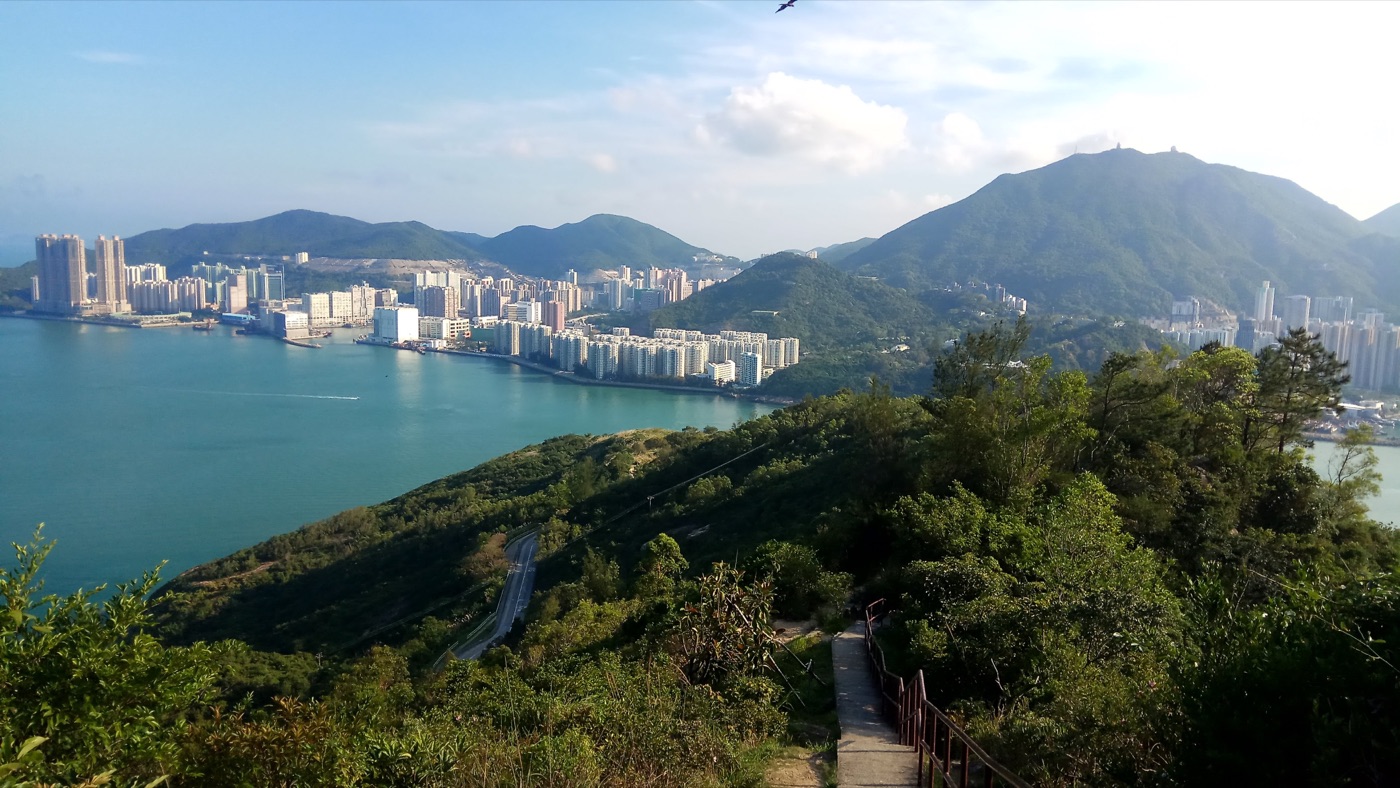
Photo: Devil’s Peak hiking trail, Hong Kong (CC BY-SA 4.0, Wikimedia Commons)
🪨 Suicide Cliff (自殺崖) — Kowloon Peak
Officially it’s a spur off Kowloon Peak (also called Fei Ngo Shan, “Flying Goose Mountain”), 602m above sea level in northeast Kowloon. Locally, everyone just calls it 自殺崖 (Ziisha Ya) — Suicide Cliff. The name isn’t for shock value: it’s a rugged, exposed rock spur jutting straight out above the city with absolutely nothing between you and a very long drop. It’s also one of the single best viewpoints in all of Hong Kong — a 360° panorama over the entire Kowloon peninsula and Hong Kong Island that genuinely takes your breath away at sunset.
There are two ways up:
🟢 The Moderate North Route (9.5km, ~3.5 hrs)
Start from Diamond Hill MTR Exit C2, take bus 91 / 91M / 92 and get off at Good Hope School. Walk east along Clear Water Bay Road until you reach Fei Ngo Shan Road, then follow the stone stairs up past the wooden “Ma On Shan Country Park” sign. Keep an eye out for a rock marked “328” next to a “Danger” sign — that’s your turn-off toward the cliff.
🔴 The Strenuous South Route (6.5km, ~2.5 hrs)
Start at 1 Fei Ngo Shan Road. This is not an official trail — you’re following ribbons tied to trees and ropes bolted into the slope. Expect a hands-and-feet scramble over loose stone near the top, grabbing onto bushes for balance. This route is for experienced hikers only. Do not bring beginners or small children up this way.
Distance from the bus drop-off to the summit on the north route is roughly 2.7 miles with about 1,371ft (418m) of elevation gain — figure on around 2 hours 14 minutes at a steady pace, more if you’re stopping for photos every five minutes (you will be). Keep your eyes peeled in the lower, forested sections — wild macaques are common and will absolutely take food out of an open bag if you let them.
People have been seriously injured and killed at Suicide Cliff. There are no guardrails, no safety netting, and the rock can be slippery even when it looks dry. Do not go near the edge in wind, rain, or low visibility, and never attempt this hike during or after the rainy season (May–September) when the rock is unstable. If in doubt, view it from a distance and move on — the photo is not worth it.
The insider move: hike up for sunset, then stay. The night view from the cliff is “another level” — the entire city grid lights up below you, and on a clear night you can see all the way out to Lamma Island. Bring a proper headtorch (not your phone) for the walk back down, since the trail has zero lighting.
⛩️ Braemar Hill & Red Incense Burner Summit (紅香爐峰)
If Suicide Cliff is the “earn it” hike, Braemar Hill is the best view-to-effort ratio in the entire territory. Ten minutes from the bus stop gets you one of the most spectacular panoramas of Victoria Harbour you’ll find anywhere — and it’s right in the city’s backyard, a world away from the queues at the Peak.
The headline viewpoint is Red Incense Burner Summit (紅香爐峰 / Hung Heung Lo Fung), named after a rock formation at the top that looks like a traditional Chinese incense burner. Get there from Causeway Bay MTR Exit E: hop on Green Minibus 25 to the Braemar Hill Bus Terminus, then it’s a short scramble over granite boulders to the top — maybe 10 minutes, family-friendly, kids can do it.
What makes this spot special: the sun sets directly between the IFC and ICC towers, sinking right into Victoria Harbour. Some locals will argue this sunset beats the one from Victoria Peak — and once you’ve seen it, it’s hard to disagree. After dark, you’ll find photographers with tripods set up along the ridge most clear evenings. Bring yours.
Secret detour: from Tai Hang, walk up to Lin Fa Kung Temple, through Lin Fa Kung Garden, and take the stone steps up from there — a quieter, more atmospheric approach than the minibus.
If you want more, the full Mount Butler Road route (1.5–2 hours, 3.4 miles) takes you past the Red Incense Burner Summit and a second viewpoint, the Braemar Hill Lookout (slightly further east, equally stunning, usually less crowded). Take bus 24M to Mount Butler Block C & D and follow the rock viewpoint detours along the way.
🦁 Bonus Hike: Lion Rock (獅子山) — The Soul of Hong Kong
No hiking list is complete without Lion Rock, and not just because of the view. “Lion Rock Spirit” (獅子山精神) is a phrase every local understands instantly — it’s Hong Kong’s idiom for grit, resilience, and getting on with it no matter what, the same way “Dunkirk spirit” carries weight in England. It comes from a 1970s TV drama about working-class families in the shadow of the mountain, and it’s been invoked ever since during economic crashes, epidemics, and political upheaval.
Practically speaking: it’s accessible from Wong Tai Sin MTR, and it’s a genuinely challenging climb — steep, rocky, and exposed near the top — but the reward is one of the most iconic views in Asia: the lion-shaped ridge framing the entire Kowloon grid below, with Hong Kong Island and the harbour beyond. If Suicide Cliff is the adrenaline hike and Braemar Hill is the easy win, Lion Rock is the one that means something.
5 Rooftop Bars Worth Getting Dressed Up For
Hong Kong doesn’t really do “modest” when it comes to rooftop bars — it’s one of the only cities on earth where the bar itself can be a tourist attraction. Here are five that earn the hype, plus one most visitors never hear about.
🌌 Ozone — The Ritz-Carlton, West Kowloon
Floor: 118th floor, 480m above sea level — the highest rooftop bar in the world. Vibe: sleek, see-and-be-seen, floor-to-ceiling glass with views over the entire harbour and beyond. Price range: $$$$ (cocktails from ~HK$160-220). Best for: a special occasion, first-night-in-the-city wow factor, impressing a date. Insider tip: book a sunset slot online in advance — walk-ins after 7pm regularly get turned away.
🌿 Popinjays — The Murray Hotel, Central
Floor: 26/F, with a 420sqm wrap-around terrace overlooking The Peak and Central’s green spaces. Vibe: lush, plant-filled, more “garden party” than “skyscraper bar.” Menu: modern European small plates alongside the cocktail list. Hours: Thu–Sun, 12pm–2am, often with live music. Best for: groups and long, lazy afternoons that turn into evenings. Insider tip: go for the late lunch sitting — the terrace is at its best in the soft afternoon light before the dinner crowd arrives.
🍹 Red Sugar — Kerry Hotel, Hung Hom
Floor: Level 7, with a 270° wrap-around terrace facing Victoria Harbour and the Hong Kong Island skyline. Menu: a Four Seasons-themed cocktail list, plus bar snacks that punch way above their weight — the prawn toast and mapo tofu quesadilla are not jokes. Vibe: DJ evenings, more relaxed than Central’s bars. Best for: a date night on the Kowloon side without the Central crowds. Insider tip: the harbour-facing tables fill up fast on DJ nights — arrive before 7pm to claim one.
🏙️ Sugar — EAST Hong Kong, Quarry Bay
Floor: 32/F, looking out over east Kowloon and the mountain range behind it — a different (and underrated) angle on the city. Menu: yakitori skewers and pumpkin korokke alongside the cocktails. Vibe: regular ladies’ nights, a slightly more local, less tourist-heavy crowd than Central. Best for: after-work drinks with a view that doesn’t feel like a postcard. Insider tip: book ahead — this one fills up with the Quarry Bay/Taikoo office crowd on weeknights.
💎 Hidden Gem: Hyatt Centric Victoria Harbour — North Point
Floor: 23/F, West Tower, with full harbour views. Menu: Italian-Japanese fusion — try the gin pandan spritz with a garden pizza. Vibe: resident DJ, noticeably less touristy than the big Central names — mostly locals and people staying nearby. Best for: the same harbour view as the famous spots, at a fraction of the crowd (and often the price). Insider tip: this is the rooftop to suggest when a friend says “I want the view but I don’t want to queue.”
Hidden Beaches — Yes, Really
Here’s the part that surprises almost everyone: Hong Kong has over 700km of coastline, and tucked into the eastern New Territories — mostly within the Sai Kung UNESCO Geopark — are some of the most dramatic, least-crowded beaches in this part of Asia. If your mental image of Hong Kong is concrete and neon, this section is going to mess with it in the best way.
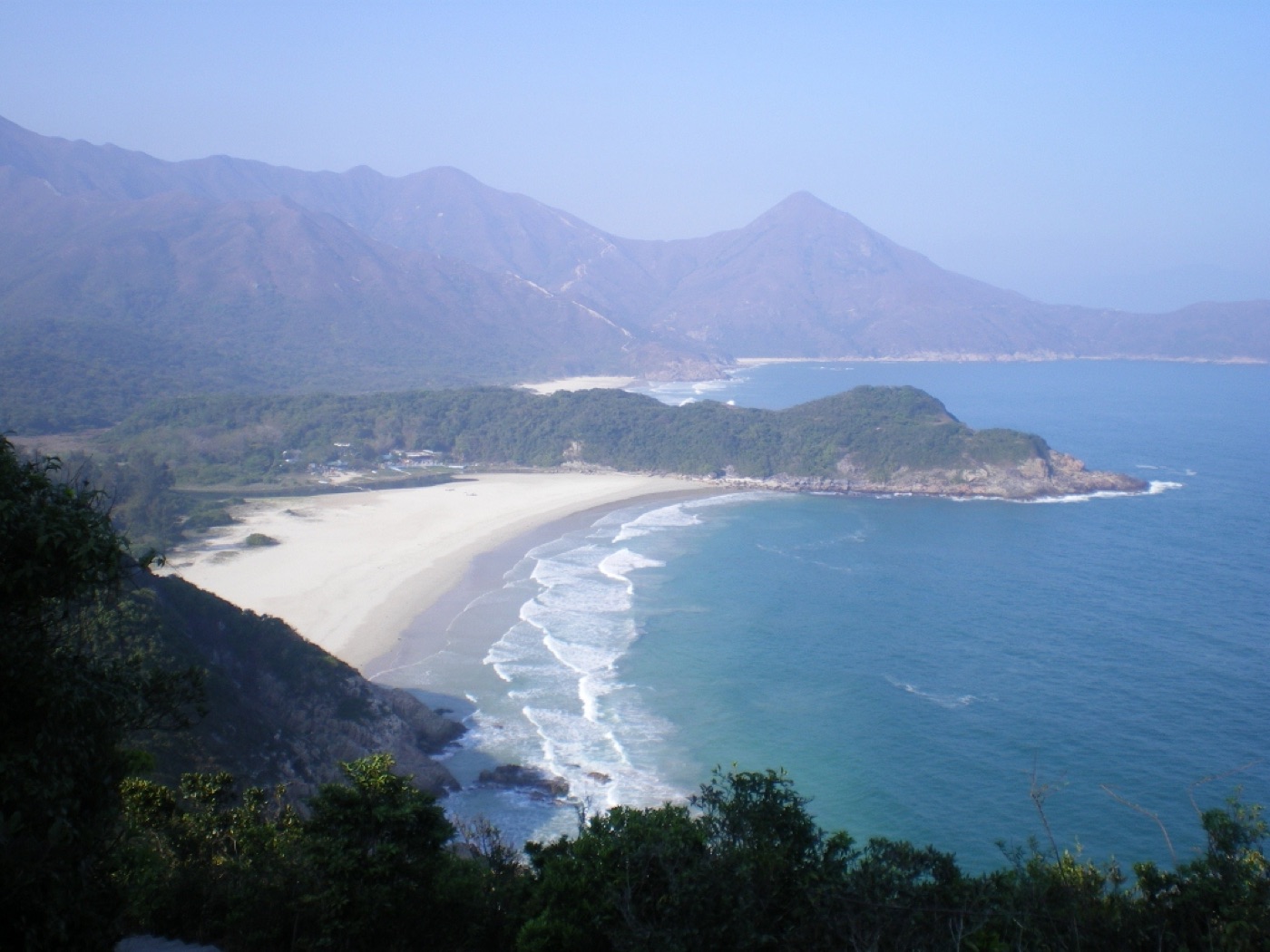
Photo: Tai Long Wan, Sai Kung (CC BY 2.0, Wikimedia Commons)
🌊 Tai Long Wan — Hong Kong’s Most Pristine Beach Complex
Tai Long Wan (“Big Wave Bay” — not the more famous one on Hong Kong Island) is actually four linked beaches — Sai Wan, Ham Tin, Tai Wan and Tung Wan — stretching across roughly 3km of UNESCO Geopark coastline. The water is genuinely turquoise, the sand is soft and pale, and on a good day people compare it to the Maldives — which sounds absurd until you’re standing on it.
Strong rip currents make parts of it surfer territory rather than a calm family swim, so check conditions before you go in. Get there by hiking MacLehose Trail Section 2 from Pak Tam Chung (around 2.5 hours), or — the much faster option — charter a speedboat from Sai Kung Pier (~30 minutes).
The hidden gem within the hidden gem: at the far end of Sai Wan Beach are the Sai Kung Rock Pools — natural, multi-tiered swimming pools and a waterfall fed by Sheung Luk Stream, flanked by 140-million-year-old hexagonal volcanic rock columns (the same UNESCO geology you’ll see across the Geopark). It’s a popular cliff-jumping spot and one of the most photographed natural features in Hong Kong. Camping overnight on the beach is allowed and genuinely worth doing if you have the gear.
🏝️ Long Ke Wan — Hong Kong’s Last Hidden Beach
Often described as “Hong Kong’s last hidden beach,” Long Ke Wan is raw and rustic — translucent water, powder-soft sand, an overnight campsite, and crucially: no facilities, no restaurants, no crowds on weekdays. The same ancient hexagonal volcanic rocks that define the Geopark frame the bay here too, and they photograph beautifully.
Get there by taxi from Sai Kung to the East Dam (of the High Island Reservoir), then follow the MacLehose Trail signage to Long Ke Wan — or charter a speedboat if you’d rather skip the walk entirely.
🌓 Hap Mun Bay (Half Moon Bay) — Sharp Island
A perfect crescent-shaped bay on Sharp Island, only reachable by boat — hop on a sampan from Sai Kung New Public Pier (the “sampan ladies” along the waterfront sell round-trip tickets, no booking needed). The sand here is unusually fine and the water unusually clean for a city beach.
The real bonus: at low tide, a natural sand bridge called a tombolo appears, connecting Sharp Island to a smaller islet — one of the most photogenic natural features anywhere in Hong Kong, and most visitors have no idea it exists.
🏖️ Pui O Beach — Lantau Island’s Hidden Gem
Pui O has unusual black-and-white sand, calm family-friendly water, and a laid-back, almost rural feel — water buffalo occasionally wander onto the beach, which tells you everything about the pace of life here. Get there via ferry from Central Pier 6 to Mui Wo, then bus 1 / 2 / 3M / 4 to the Lo Uk Tsuen stop.
Where to Eat — And Why It Tastes Like History
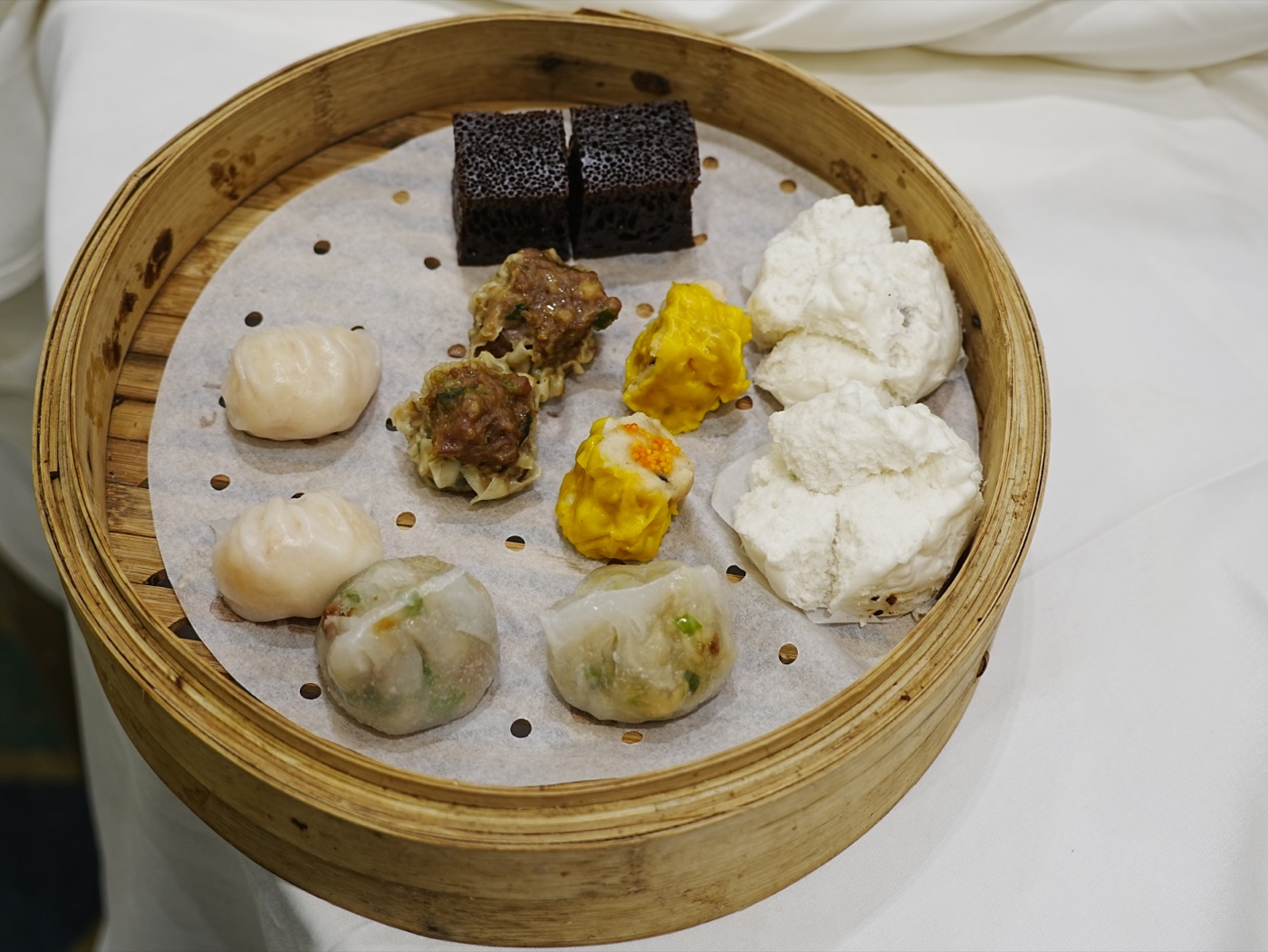
Photo: a classic dim sum spread (CC BY-SA 4.0, Wikimedia Commons)
🍳 The Cha Chaan Teng (茶餐廳) — Hong Kong’s Soul Food Institution
If you eat at only one type of restaurant in Hong Kong, make it a cha chaan teng — literally “tea restaurant.” These diners are as essential to Hong Kong identity as the skyline itself, and the story of how they came to exist tells you a lot about the city.
Cha chaan tengs were born in the 1940s-50s, under British colonial rule, as the working class’s answer to expensive Western restaurants that ordinary people couldn’t afford. The result was what’s affectionately called “soy sauce Western cuisine” — Western-style dishes (steaks, sandwiches, pasta, “borscht”) reimagined with canned ingredients and local techniques, partly because open-fire cooking was restricted under “small licence” food regulations at the time. Their predecessor was the bing sutt (冰室 — “ice room”), which served cold drinks, ice cream, shaved ice, and sandwiches to people seeking relief from the heat.
The name itself dates to 1946, when Lan Heung Shut in Central became the first recorded establishment to use the term “cha chaan teng.” By 1960, the Hong Kong government had created an official cha chaan teng licence — cementing it as its own category of restaurant, distinct from both Western restaurants and traditional Chinese ones.
For the real deal, go to Lan Fong Yuen (蘭芳園) in Central — the oldest standing cha chaan teng in Hong Kong, and the place credited with inventing both yuenyeung (a coffee-and-milk-tea blend) and the legendary “silk-stocking” milk tea, strained through a cloth bag until it’s impossibly smooth. Even if you just stand outside and watch the milk tea get poured from height between two pots, it’s worth the visit.
What to order: a pineapple bun (菠蘿包) with a thick slab of cold butter inside, Hong Kong-style French toast (deep-fried, stuffed with peanut butter — yes, really, and yes, it’s incredible), silky milk tea, a yuenyeung, baked pork chop rice, and the classic Hong Kong “breakfast” of macaroni in broth with ham and a fried egg. Round it off with an egg tart on the way out.
Where to go: Lan Fong Yuen (Central) for the history, Tai Hing (multiple locations) for consistent quality, and Tsui Wah (Wan Chai/Central, open 24 hours) for the full late-night cha chaan teng experience — it’s practically a Hong Kong rite of passage to end up there at 2am.
One cultural note worth knowing: in Cantonese, “得閒飲茶” (dak haan yam cha) — “let’s go for tea when you’re free” — is the standard, warm way of saying goodbye to a friend. It doesn’t really mean “let’s make a plan.” It’s the Hong Kong equivalent of the Italian “ci vediamo” — a way of signalling fondness without commitment. If someone says it to you, take it as a compliment.
🥟 Dim Sum — The Art of Yum Cha
Yum cha literally means “drink tea” — the food, technically, is secondary. The tradition traces back over 2,000 years to teahouses along the Silk Road, which began adding small snacks to accompany tea service for travelling merchants. That snack culture eventually became the elaborate dim sum spreads Hong Kong is famous for today.
Lung King Heen, inside the Four Seasons Hotel in Central, was the first Chinese restaurant in the world to receive three Michelin stars — and it’s still the gold standard, with views over Victoria Harbour while you eat har gow that practically dissolve.
Tim Ho Wan (original branch in Sham Shui Po, now multiple locations) was once dubbed the “world’s cheapest Michelin-starred restaurant” — founded by a former Lung King Heen chef, Mak Kwai Pui. Their baked BBQ pork bun (baked, not steamed) is reportedly the most-ordered dish in all of Hong Kong. There’s always a queue. It’s always worth it.
Luk Yu Tea House in Central is 92 years old and has barely changed its spirit since opening in the 1930s — get there early, and don’t leave without trying the beef siu mai and stuffed peppers with dace fish.
One Dim Sum in Prince Edward is the local cult favourite — perpetual queue, dirt cheap, no English menu (Google Translate’s camera feature is your friend here). And for something more recent: Rún at the St. Regis Hong Kong holds two Michelin stars in the 2025 guide, with Chef Hung Chi-Kwong’s char siu and wagyu puffs already developing a reputation of their own.
⭐ Budget Michelin — Eat Like Royalty for Under HK$200
The myth that Michelin = expensive does not apply in Hong Kong. Tim Ho Wan and One Dim Sum (both above) routinely deliver Michelin-recognised meals for less than the price of a fast food combo elsewhere. Add Yat Tung Heen, whose weekday lunch set is one of the best-value Michelin-starred meals in the city. The real trick: skip the three-star list entirely and search for the Michelin Bib Gourmand list — that’s where the genuine, no-frills, life-changing-for-the-price gems live.
🍜 Local Restaurants Not to Miss
Roast goose is the dish to chase if you only try one “proper” Cantonese meal — Yat Lok and Yung Kee in Central are the two names locals argue about endlessly, both serving glistening, crispy-skinned goose over rice that’s worth the slight wait. For wonton noodles, look for a small, no-frills shop with a queue out the door and a faded sign — the noodles should be thin and springy, the wontons packed with whole shrimp, and the broth made from dried flounder and pork bones, simmered for hours. And for something gentler, a late-night bowl of congee from a 24-hour cart or shop — silky rice porridge with century egg and shredded pork, plus a deep-fried dough stick (youtiao) to dip — is the most comforting meal in the city, and the cheapest.
The Cannon That’s Been Fired at Noon, Every Day, for 150+ Years
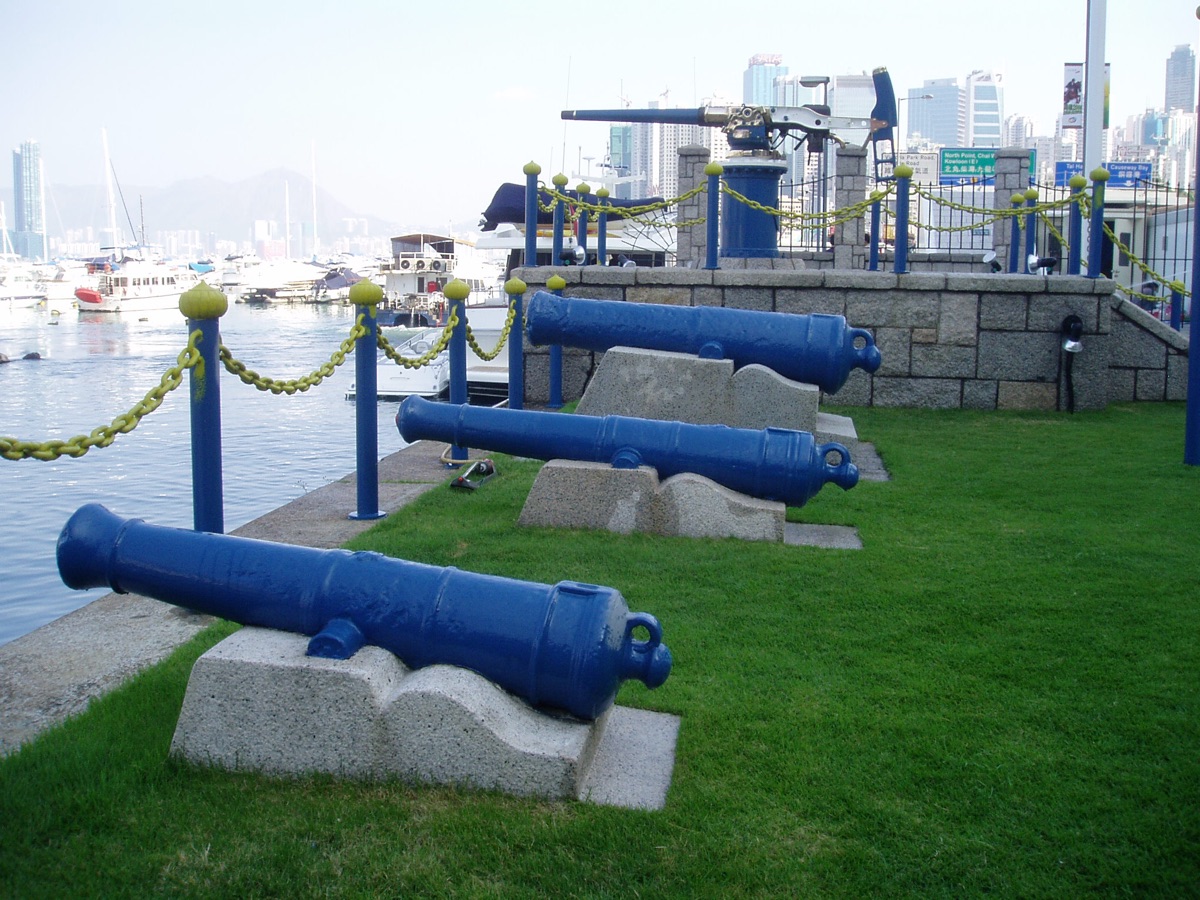
Tucked into a small waterfront spot in Causeway Bay, accessed via a pedestrian tunnel under Gloucester Road near Victoria Park, sits a small naval cannon that almost nobody outside Hong Kong has heard of: the Noon Day Gun.
The legend goes like this: in the 1860s, Jardine Matheson — one of Hong Kong’s original trading houses — fired a cannon salute to welcome home one of its taipans (company bosses), an honour that, by colonial protocol, was supposed to be reserved exclusively for the Governor of Hong Kong. As punishment for the breach of etiquette, the Governor ordered Jardine Matheson to fire the gun every single day at exactly noon, as a public time signal the whole harbour could set their watches by — forever.
More than 150 years later, they still do it. Every day, at noon, on the dot, the gun fires — a small, sharp boom that locals barely register and tourists nearby visibly jump at. It costs nothing, takes two minutes, and most people who’ve lived in Hong Kong for years have never actually timed a visit to see it. If you’re anywhere near Causeway Bay around midday, this is the kind of “you had to be there” moment that separates a trip report from a real Hong Kong story.
Plan your visit — practical tips below ↓Practical Tips for Getting Around Hong Kong
💳 Octopus Card
Get one the moment you land — it covers MTR, buses, ferries, minibuses, convenience stores, and most cha chaan tengs. Top up with cash at any MTR station. Carry a little cash for wet markets and rural Sai Kung minibuses, where card readers are less common.
🚇 The MTR System
Fast, spotless, and frequent — the MTR is genuinely one of the best metro systems in the world. Download Citymapper before you arrive; it handles MTR, buses, minibuses, ferries and walking directions in one app and is far better than Google Maps for local transit quirks.
🌦️ Weather & Best Season
October–April is cooler, drier, and far less humid — by far the best window for hiking and beach trips. Summer (June-September) is hot, sticky, and brings typhoon season.
🌀 Typhoon Signals
Check the Hong Kong Observatory before any hiking or beach plans. Typhoon Signal No. 8 shuts down almost everything — public transport, schools, offices, ferries. If it’s hoisted, stay indoors and treat it as a snow-day, not an inconvenience.
💰 Tipping
Not expected, and not really part of the culture. Many restaurants add a 10% service charge automatically — that’s it, no additional tip needed on top.
📱 SIM Card / eSIM
Pick up a local SIM at the airport, or sort an eSIM before you fly so you land already connected — useful for Citymapper, OpenRice and maps from the moment you land. If you’re island-hopping around Asia afterward, our Asia eSIM comparison covers the best options for multi-country trips.
🛏️ Where to Stay
Tsim Sha Tsui — Kowloon side, harbour views, good value, walkable to the Star Ferry. Central — Hong Kong Island, closest to nightlife, rooftop bars and business district, pricier. Causeway Bay — shopping, food, the Noon Day Gun, and a very central MTR hub for day trips.
📲 Apps to Download
Citymapper for transit, OpenRice for restaurant reviews (the local equivalent of Yelp), and Klook for booking day tours, the Peak Tram, and Sai Kung speedboat charters in advance.
🎒 Budget Daily Cost
~HK$400–600/day (~$50–75) — hostel dorm or guesthouse, cha chaan teng meals, MTR everywhere.
🏨 Mid-Range Daily Cost
~HK$1,200–2,000/day (~$150–255) — 3–4 star hotel, restaurant meals, the occasional taxi or Star Ferry first class.
💎 Comfort Daily Cost
~HK$3,000+/day (~$385+) — 5-star harbour-view hotel, fine dining, private transport around the island.
If Sai Kung’s hiking and beach-hopping is on your list, a reliable power bank and a good universal travel adapter earn their keep fast — phone batteries don’t love all-day GPS tracking on the trail, and Hong Kong’s plug sockets are the UK three-pin type, which catches a lot of visitors out.
And if you’re curious just how stark East Asia’s contrasts can get — Hong Kong’s “neon dystopia meets ancient temple” energy is one thing, but it’s nothing compared to the other end of the spectrum just a short flight away. We’ve covered what it’s actually like (and whether you even can) to visit North Korea in 2026 — a genuinely fascinating read if Hong Kong leaves you hungry for more of Asia’s extremes.
A Simple 3-Day Hong Kong Itinerary
Day 1 — Hong Kong Island
Peak Tram up to Victoria Peak in the morning, wander Central and SoHo, Star Ferry across to Tsim Sha Tsui for sunset, Symphony of Lights over the harbour at 8pm.
Day 2 — Hikes & Beaches
Early start for Lion Rock or Braemar Hill before the heat, then Sai Kung in the afternoon for a speedboat out to Hap Mun Bay or Tai Long Wan.
Day 3 — Food & Culture
Morning dim sum, Man Mo Temple and the antiques on Hollywood Road, Noon Day Gun at Causeway Bay, then a rooftop bar for the last night.
Have longer? Add a fourth day for Lantau Island (the Big Buddha and cable car) or Cheung Chau for a slower, boat-only island day.
Planning a Hong Kong Trip?
Sort your eSIM, power bank and adapter before you land — Sai Kung, Suicide Cliff and a full day of dim sum will drain a phone battery faster than you think. Check our Asia travel essentials guides below.
Best eSIM for Asia →Common Questions
What is Suicide Cliff in Hong Kong?
Suicide Cliff (自殺崖) is the local nickname for a dramatic rocky spur off Kowloon Peak (Fei Ngo Shan), 602m high in northeast Kowloon. It offers a 360° panorama over Kowloon and Hong Kong Island, especially at sunset. There are no guardrails and the terrain is genuinely dangerous, so it should only be attempted by experienced, well-prepared hikers in good weather.
Why is it called the Noon Day Gun?
The Noon Day Gun in Causeway Bay is a small cannon that’s been fired at exactly 12pm every day since the 1860s. Legend says Jardine Matheson fired a gun salute for one of its taipans — an honour reserved for the Governor — and as punishment, the company was ordered to fire the gun daily at noon as a public time signal, a tradition that continues to this day.
What is the best time of year to visit Hong Kong?
October through April — cooler, drier, and far less humid, which makes hiking and outdoor exploring much more pleasant. Summer (June-September) is hot, humid, and brings typhoon season, when Hong Kong Observatory signals can shut down trails, ferries, and even the city itself.
Are Hong Kong’s beaches actually worth visiting?
Yes — Hong Kong has over 700km of coastline and genuinely stunning beaches, particularly around the Sai Kung UNESCO Geopark. Tai Long Wan and Long Ke Wan have turquoise water, powder sand, and ancient hexagonal volcanic rock formations that look more like Southeast Asia than a dense financial hub.
Do I need cash in Hong Kong or can I use an Octopus card everywhere?
The Octopus card covers almost everything — MTR, buses, ferries, minibuses, convenience stores, and most cha chaan tengs. Carry some cash for wet markets, small noodle shops, and rural minibuses in places like Sai Kung, where card readers are less common.
Related Reading
Hidden gems & hikes Start Reading →
One printable page — everything to do 30/14/7 days before your flight, packing musts, and day-one steps. Drop your email and it's yours.