
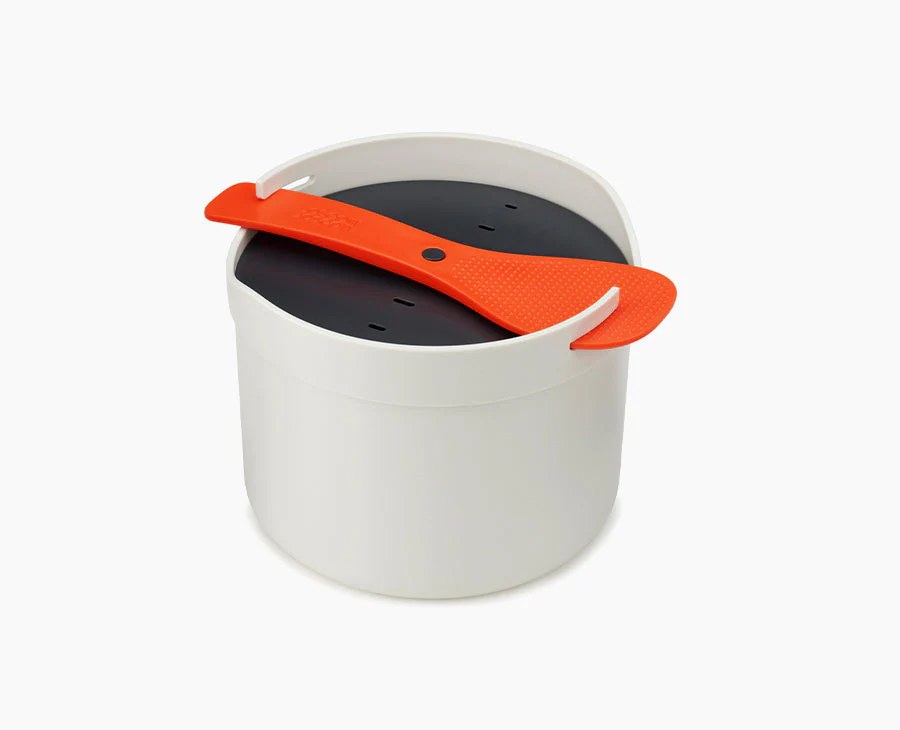
Can you microwave rice to cook it? Yes — a microwave rice cooker (also called a microwave rice steamer) cooks white rice in about 12 minutes and brown rice in 30-35 minutes, with no stove and no watching a pot. It works for white, brown, jasmine, and sticky short-grain rice, each with its own water ratio and timing — full breakdown below.
In Korea, Rice Is Not a Side Dish. It’s the Meal.
The Korean word for “meal” is “bap” (밥) — which literally means cooked rice. Not “food.” Rice. The Korean greeting for “have you eaten?” is “bap meogeotseo?” — “did you eat rice?” The food and the meal are the same word.
Korea has cultivated rice for over 2,000 years. The variety they grow and eat — short-grain japonica rice — is completely different from the long-grain rice common in Western cooking. It’s stickier, softer, and has a subtly sweet flavour that absorbs sauce and broth perfectly.
Getting this rice right at home outside Korea is harder than it sounds. The texture depends entirely on the water ratio and steam technique. A proper rice cooker does this automatically. The microwave method, done correctly, gets remarkably close.
- Average Korean eats 57kg of rice per year
- Koreans eat rice at breakfast, lunch AND dinner
- Short-grain japonica rice — different from long-grain
- Korean rice cookers (쿠쿠, 쿠첸) are national icons
- Rice is considered healthy, light, and easy to digest
A proper Korean rice cooker costs $100-300. Takes up counter space. This microwave cooker costs $22, fits in a drawer, and produces nearly identical results. For students, office workers, and anyone without a full kitchen setup — this is the move.
Best Microwave Rice Cooker 2026: $22 vs $150 — Which Actually Wins?
After a year eating Korean rice daily, I’ve used both a $22 microwave rice cooker and a $150+ electric rice cooker (Cuckoo). Here is the honest comparison — because most reviews either trash the microwave version or oversell it.
| Microwave Rice Cooker | Electric Rice Cooker | Stovetop Pot | |
|---|---|---|---|
| Price | ~$22 | $50–$200 | Free (you have one) |
| Cook time | 12 min | 25–35 min | 20–25 min |
| Rice quality | Very good | Excellent | Good (with practice) |
| Works in dorm/flat | ✓ Yes | ✓ Yes | ✗ Needs stove |
| Cleanup | 1 piece, dishwasher safe | Inner pot + lid | Starchy pot, harder |
| Best for | Students, small kitchens | Daily rice eaters | Occasional use |
Verdict: If you eat rice more than 3× a week, get an electric rice cooker. If you eat rice occasionally, or live in a dorm where a rice cooker isn’t allowed, the microwave version wins easily — it makes rice that is indistinguishable to most people at a fraction of the cost.
Why This Works Better Than a Pot
Steam-Sealed Lid
The lid locks during cooking, trapping steam inside. This is what makes Korean rice different — it’s steam-cooked, not boiled. The pressure builds gently and forces moisture into every grain. A pot with no lid loses this steam entirely.
Precise Timing
12 minutes on high, then 5 minutes resting (lid closed). This rest period is where the rice finishes steaming and the texture sets. Skip it and the rice is uneven. Respect it and every grain is perfect.
Zero Mess
No pot to scrub, no starch bubbling over the stove, no burnt bottom ring. The rice cooker goes in the dishwasher. Total cleanup time: 30 seconds.
Built for Dorms & Small Kitchens
Students, office workers, travellers. If you’re cooking for 1-2 people and don’t have a full kitchen setup, this replaces a $200 Korean rice cooker at a fraction of the cost and with no counter space.
How to Make Perfect Korean Rice in the Microwave
The exact method for fluffy, slightly sticky short-grain rice.
What People Are Actually Saying
“For the first time in many years, I now have perfectly cooked rice every time. No more guessing and hoping!!”
Marian E. · via josephjoseph.com“Very handy having the integral colander for washing rice, and the spoon handle. Makes good rice with separate grains and no fuss.”
Jane H. · via josephjoseph.com“This new rice cooker is fab! When cooked, the rice doesn’t stick to the pan, unlike my previous rice cooker.”
rick h. · via josephjoseph.com🌾 Beyond Rice — Other Grains You Can Cook
| Grain | Water ratio | Cook time | Notes |
|---|---|---|---|
| Quinoa | 1:2 | 12–15 min | Rinse first to remove bitterness |
| Couscous | 1:1.5 | 5 min + 5 steam | Pour boiling water, seal lid, no microwave needed |
| Oatmeal | 1:2 | 3–5 min | Watch closely — bubbles up fast in microwave |
| Lentils | 1:2.5 | 20–25 min | Red lentils only — green need longer |
What to Eat With Your Korean Rice
💧 Microwave Rice Cooker Water Ratios — Every Rice Type
The #1 reason rice comes out wrong in the microwave is wrong water ratio. Use these exact measurements.
| Rice Type | Rice (1 cup) | Water | Cook Time | Rest Time | Notes |
|---|---|---|---|---|---|
| Korean short-grain ⭐ | 1 cup | 1¼ cups | 12 min | 5 min | Less water than long-grain — stickier result |
| White long-grain | 1 cup | 1½ cups | 12 min | 5 min | Standard ratio for most white rice |
| Jasmine rice | 1 cup | 1⅓ cups | 12 min | 5 min | Slightly less water — jasmine absorbs fast |
| Basmati rice | 1 cup | 1½ cups | 15 min | 5 min | Soak 20 min first for best results |
| Brown rice | 1 cup | 2 cups | 30–35 min | 10 min | Much more water + longer time than white |
| Wild rice | 1 cup | 2½ cups | 40–45 min | 10 min | Longest cook time — check at 35 min |
⭐ Korean short-grain is what we use at KimchiBoy — gives the sticky texture Korean food needs.
📋 How to Use a Microwave Rice Cooker — Step by Step
🔧 Microwave Rice Cooker Troubleshooting
Fix: Reduce water by 2 tbsp next time. Check wattage — if your microwave is over 1,000W, reduce cook time by 1–2 min.
Fix: Add 2 tbsp water, microwave 3 more minutes with lid on. Or increase cook time by 2 min next time.
Fix: Never fill past the max line. Check that both lid layers are fully locked. A little steam escaping the vent is normal.
Fix: After cooking, stir once from bottom to top then rest 5 min. If persistent, rotate the cooker halfway through.
🏆 Best Microwave Rice Cookers Compared — 2026
Tested and ranked for Korean short-grain rice specifically.
- Double-lid steam seal = no spills
- Vented lid — no pressure buildup
- Dishwasher safe
- Compact — fits any microwave
- Only 2-cup capacity (uncooked)
- Not for brown rice (use pot for that)
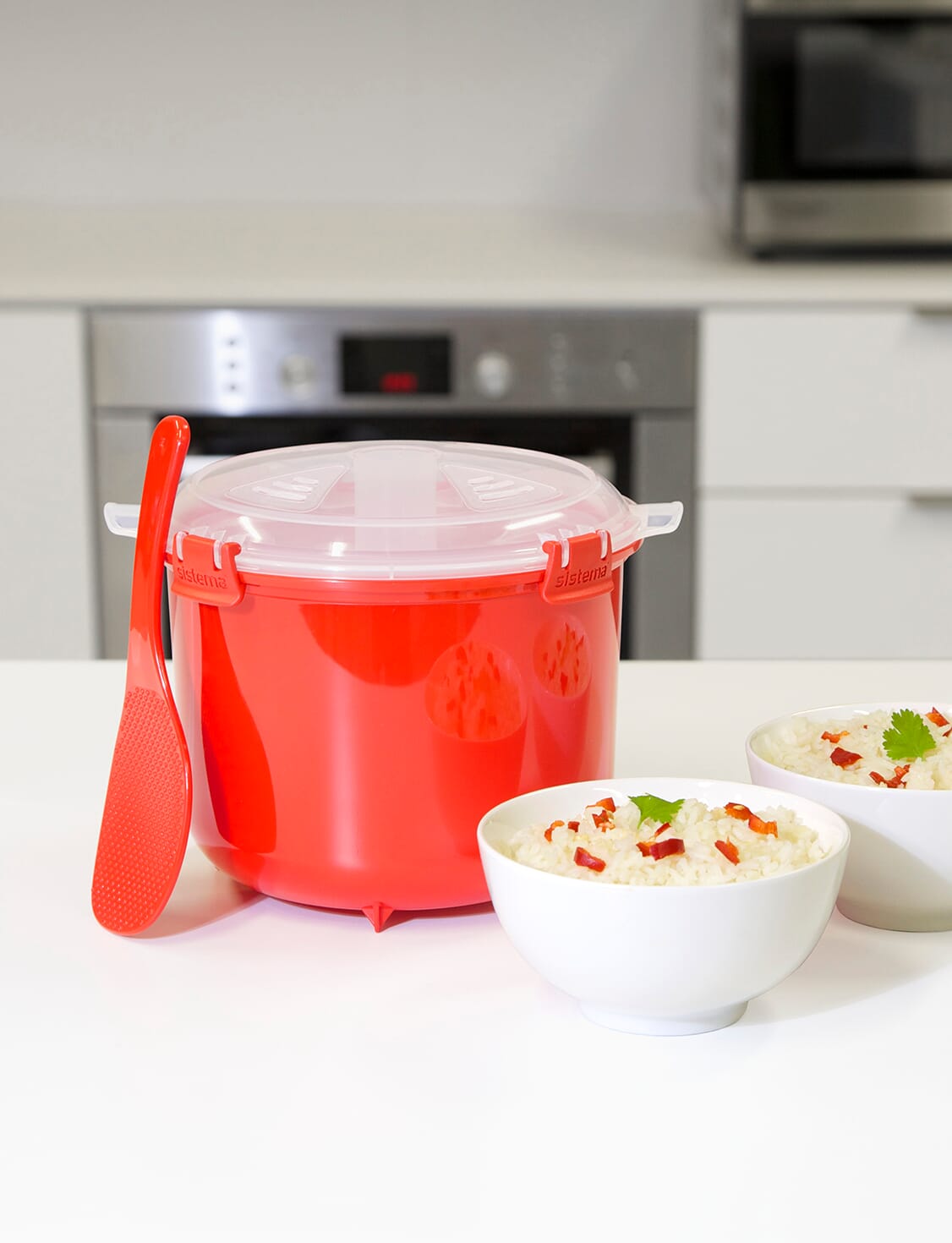
- 6-cup capacity — feeds 4
- Can also cook quinoa and oatmeal
- Colander included for rinsing
- Bulkier — needs larger microwave
- More water spillage risk at full capacity
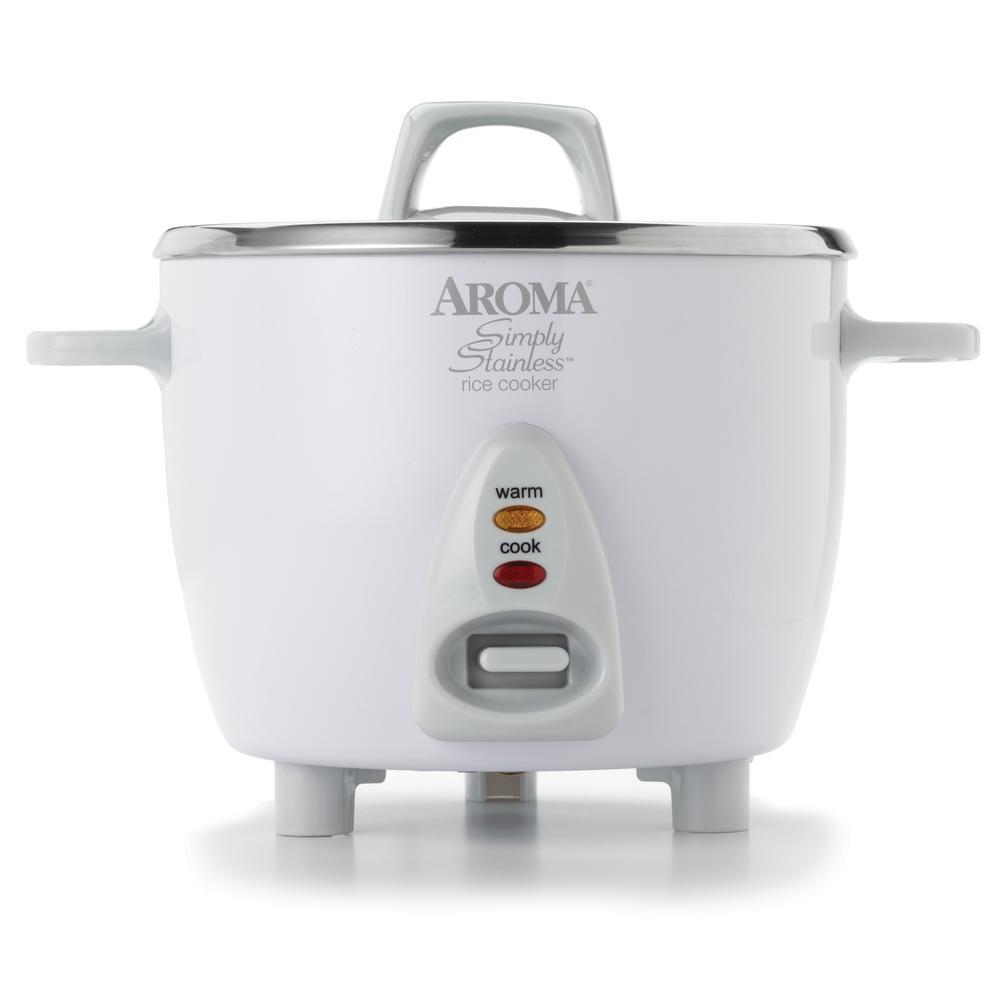
⚡ Prefer a Proper Electric Rice Cooker?
Microwave rice cookers are great for dorms and travel. But if you’re cooking Korean rice regularly at home, an electric rice cooker is worth the upgrade — more consistent results, keep-warm function, and larger capacity.
Rice Cooker FAQ
Is a microwave rice cooker the same as a microwave rice steamer?
Yes — “microwave rice cooker” and “microwave rice steamer” refer to the same type of product. Both describe a container designed to cook rice in the microwave using trapped steam instead of stovetop heat. You’ll see both terms used interchangeably by different brands and retailers.
Can you cook brown rice in a microwave rice cooker?
Yes, but it needs different treatment than white rice: soak it in cold water for 30 minutes first, use 2 cups of water per 1 cup of rice (more than white rice needs), cook for 30-35 minutes instead of 12, and rest it for a full 10 minutes with the lid on before serving. Skipping the soak is the most common reason brown rice comes out undercooked.
Which rice should I use for Korean rice?
Short-grain japonica rice — the same variety grown in Korea and Japan. Outside Asia, look for “sushi rice” or “calrose rice” in the supermarket. Do not use basmati, jasmine, or long-grain rice — the texture will be completely wrong.
Can I cook other things in it?
Yes — oatmeal, quinoa, and some grains work well. It’s primarily designed for rice but the steam-sealed cooking method works for other grains that need consistent heat and steam.
Is it dishwasher safe?
Yes. Both the container and lid are dishwasher safe. This is one of the main advantages over a pot — zero scrubbing.
How many servings does 1 cup of rice make?
About 2 generous portions or 3 smaller ones. 1 cup of dry rice = roughly 3 cups cooked. The cooker holds up to 2 cups of dry rice comfortably.
Is this better than a $150 Korean rice cooker?
For everyday use, the result is close enough that most people can’t tell the difference. A dedicated Korean rice cooker (Cuckoo, Cuchen) offers more precise pressure control and additional features — see the real electric models compared here. But for $22 vs $150+, the microwave cooker wins on value unless you’re eating rice 3 times a day.
Korean Rice. 12 Minutes. $22.
No stove. No mess. No excuses. The closest thing to a Korean rice cooker without spending $200.
🍚 Buy Microwave Rice Cooker on Amazon →Affiliate link — small commission at no extra cost to you. Prices last checked June 2026.
The most important thing about making kimbap at home is getting the rice right — sticky, slightly firm, never mushy. This microwave rice cooker nails exactly that texture in 12 minutes. Use it the same way: 1 cup short-grain rice, 1.1 cups water, season with sesame oil and salt after cooking.
Take our free 1-page Korea Pre-Flight Checklist — visas, apps, money, packing — from the team behind everything on this site.