
This page contains Amazon affiliate links. I earn a small commission at no extra cost to you. Prices last checked June 2026.
Does Gua Sha Actually Work?
(Is It Even Korean?)
The $16 stone tool that took over skincare routines everywhere — including mine. Here’s what the science actually says.
If you’ve spent any time on skincare TikTok, you’ve seen it: someone dragging a smooth stone across their jawline in slow, satisfying strokes, captioned “instant face lift.” That’s gua sha, and it’s not a passing trend — there are over 230,000 videos under the hashtag, and the tool itself shows up constantly in Korean skincare routines and spas.
What Is Gua Sha, Actually?
Gua sha originated in traditional Chinese medicine, where the term roughly translates to “scrape away illness.” The original practice used a flat tool to scrape the skin firmly enough to cause light bruising, believed to release stagnant energy and improve circulation. The facial version that’s gone viral is a much gentler adaptation — smooth, light strokes with a flat stone, no bruising involved, designed specifically for the thin skin on your face.
What the Research Actually Shows
⚠️ The Honest Limits
Here’s where most articles oversell it. The visible “lift” and contouring in before-and-after videos is almost entirely reduced puffiness from improved fluid movement — not a structural change to your face. Once normal fluid retention returns (usually within a day), the effect fades. There is currently no strong clinical evidence that facial gua sha produces permanent anti-aging results.
What it does reliably do: stimulate microcirculation, support lymphatic drainage, and relieve tension in the jaw and face — which is exactly why it feels so good and why the de-puffing effect is real, even if temporary. Dermatologists generally agree it’s a legitimate relaxation and de-puffing tool, just not a miracle device.
Jade vs. Rose Quartz: Which One to Get
Jade
Stays cooler for longer, extremely dense and durable, the traditional choice. Better for oily or acne-prone skin since it holds a cooling temperature through a full routine.
Rose Quartz
Slightly more porous, gives a touch more grip/friction. Marketed (without strong evidence) for “self-love” properties. More affordable and the most common starter option.
Honestly, the material matters less than the technique. Both work the same way — what matters is using light, consistent upward strokes, always over a facial oil or serum so the stone glides instead of tugging at skin.
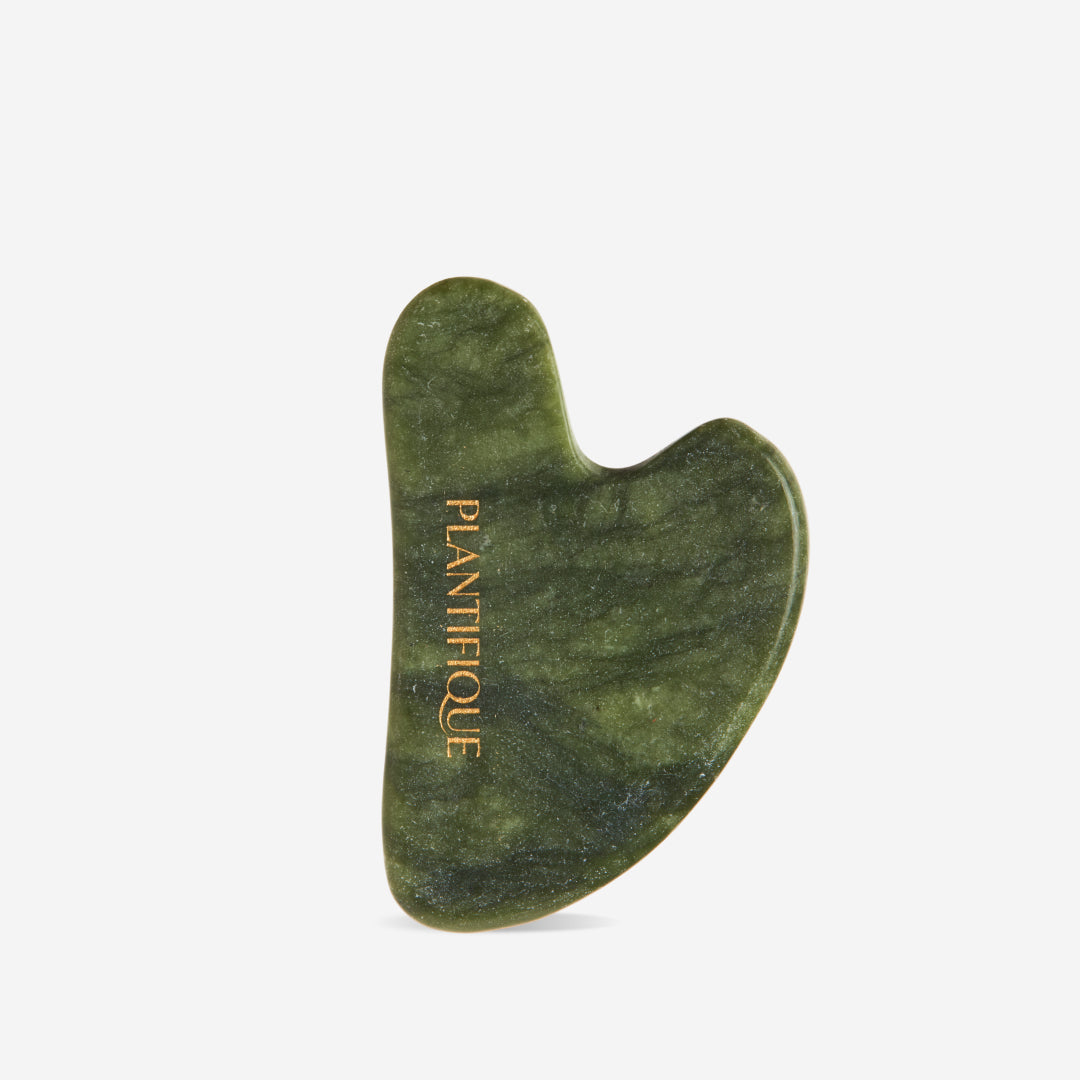
100% Genuine Jade
Plantifique Jade Gua Sha Tool100% genuine jade, sourced from Anshan, Liaoning — one of the most established sources of jade used in gua sha tools. Comes with an authenticity certificate plus a travel case.
How to Use
- Apply a facial oil or serum first — never use gua sha on dry skin.
- Hold the curved edge against your jawline at a 15-degree angle.
- Sweep upward and outward, jaw to ear, 5-7 times per side. Repeat under the eyes and across the forehead with light pressure.

The Most-Reviewed Gua Sha Set on Amazon
BAIMEI Rose Quartz Gua Sha + Jade Roller SetRose quartz runs slightly warmer than jade and gives a touch more grip on the skin — some people find it easier to control for lighter strokes. This set comes with a roller too, making it one of the most complete starter kits at this price point. The 54,383 rating count makes it the most-reviewed gua sha tool on Amazon by a significant margin.
The technique is identical to jade — apply oil first, light upward strokes, 5-7 passes per side. The material difference is mostly personal preference.
Pairs Well With
Gua sha works best as part of a routine, not a standalone fix. If you’re already doing the Korean glass skin routine, add gua sha as the final step after serum, before sunscreen. It’s also a natural companion to the LED face mask — some people use gua sha to massage in product right after an LED session while skin is still warm.
If you’re curious why Korean skin culture leans so heavily on tools like this rather than just products, I covered the full picture in why Korean skin ages differently — sunscreen and diet matter more, but consistent small rituals like this are part of the system too.
Common Questions
Does gua sha actually reduce wrinkles?
Not permanently. Clinical evidence for lasting anti-aging effects doesn’t currently exist. What it reliably does is reduce temporary puffiness and improve circulation, which can make skin look more contoured in the short term.
Is gua sha Korean or Chinese?
Gua sha originated in traditional Chinese medicine. It has since been widely adopted into Korean skincare routines and spas, but the practice itself is Chinese in origin.
How often should you do facial gua sha?
3-4 times a week is typical. Daily use is fine for most people, but always use it with oil or serum, never on dry skin, to avoid micro-tearing or irritation.
Jade or rose quartz — which is better?
Both work through the same mechanism. Jade stays cooler longer and suits oily or acne-prone skin; rose quartz is slightly more affordable and the more common starting option. The technique matters more than the material.
Can gua sha cause bruising?
Traditional body gua sha is meant to cause light bruising. The facial version that has gone viral uses much lighter pressure and should not bruise — if it does, the pressure being used is too heavy.
Gua Sha Is One Piece
Here’s the complete Korean skincare routine it fits into.
See the Glass Skin Routine →Related Reading
Affiliate links — commission at no extra cost to you. Prices last checked June 2026.
Take our free 1-page Korea Pre-Flight Checklist — visas, apps, money, packing — from the team behind everything on this site.