

The Quick Answer
4 tiers, each for a different budget and use case. Tap any one to see the full review below, or buy straight from here.
Full Comparison — Specs, Pros, Cons & Real Reviews
Every price, rating, and review below is real and current.
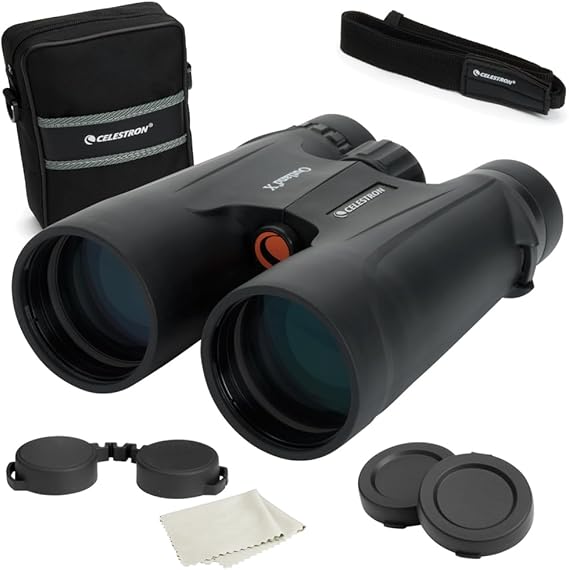
Celestron Outland X 10×50 Binoculars
The highest raw magnification in this lineup — 10× brings North Korea 10× closer, and the 50mm objective lens gathers plenty of light even on overcast Korean days. Rubber-armored and waterproof. The minimum spec worth bringing.
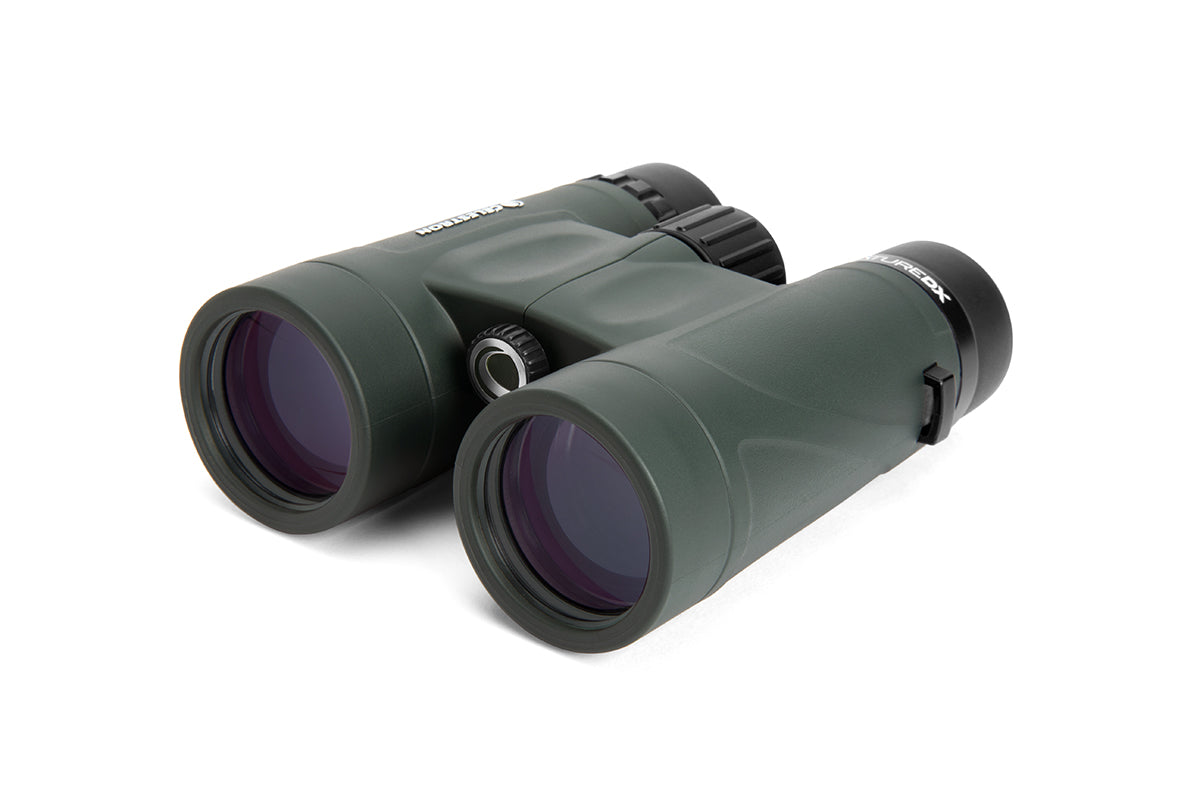
Celestron Nature DX 8×42 Binoculars
8× instead of 10× — slightly less magnification, but a wider field of view, phase-coated BaK-4 prisms, and far better optics for the money. Easier to hold steady without shaking, fully waterproof, and genuinely useful well beyond the DMZ. The pick if you only buy one pair of binoculars in your life.
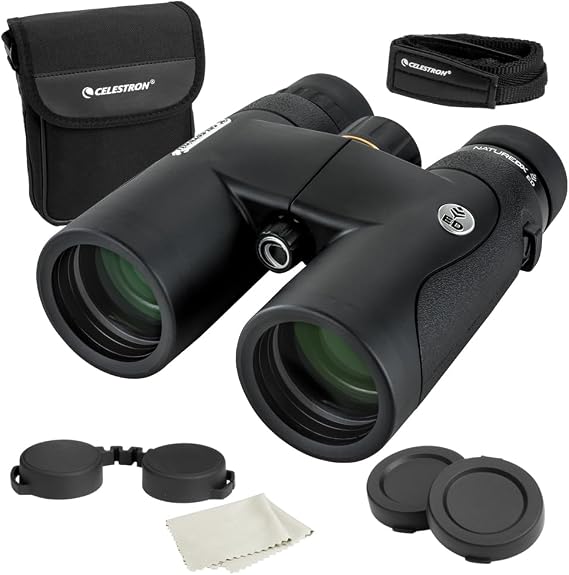
Celestron Nature DX ED 10×42 Binoculars
One step up from the Nature DX — real ED (extra-low dispersion) glass eliminates the colour fringing you get from cheaper binoculars at high zoom, plus 10× magnification for pulling guard posts noticeably closer. Worth it if you want the best possible glass, not just “good enough.”
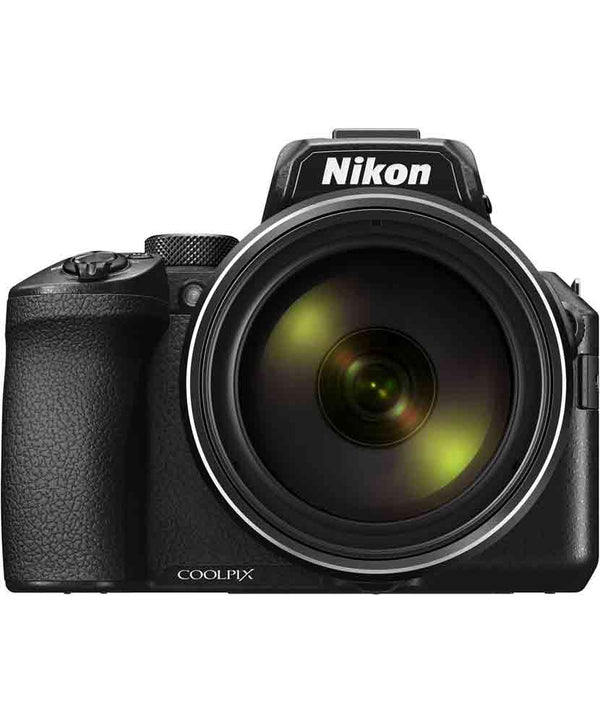
Nikon Coolpix P950 — 83× Optical Zoom
Not binoculars — a camera with an 83× optical zoom (2000mm equivalent) and 4K video. If you want to actually photograph or film North Korean guard posts and buildings in detail, this is the tool — the footage from this camera is what goes viral on YouTube. Not allowed at JSA/Panmunjom (200mm+ restriction) — use at Dora Observatory and Aegibong, where photography toward North Korea is permitted.
A High-Capacity Power Bank
DMZ tours run 6-8 hours of filming, photographing and navigating. You will run out of battery before you’re back in Seoul. CCC certification matters too if you’re continuing on to China.
Inside Korea’s Demilitarized Zone — What I Saw
The Border That Froze in 1953
The Korean War began on June 25, 1950, when North Korean forces crossed the 38th parallel and invaded the South. Three years of brutal fighting followed — involving US, UN, Chinese, and Korean forces — killing an estimated 5 million people.
The war ended not with a peace treaty, but with an armistice signed on July 27, 1953. The Korean War technically never ended. The two Koreas are still at war. The DMZ is the ceasefire line.
The Demilitarized Zone stretches 250km across the peninsula. Despite its name, it is one of the most militarised places on Earth — lined with guard posts, razor wire, tank traps and over 2 million land mines.
Timeline
Things Nobody Tells You About the DMZ
A Tree Nearly Started a Second Korean War
In 1976, North Korean soldiers axe-murdered two US Army officers who were trimming a poplar tree blocking a sightline. The US responded with Operation Paul Bunyan — 813 soldiers, B-52 bombers, and warships — to finish cutting the tree. North Korea backed down.
North Korea Built an Entire City With No Residents
Kijong-dong (“Peace Village”) is visible from the DMZ — but nobody lives there. It’s a propaganda village built in the 1950s to encourage defections. The buildings have no glass in the windows. Lights turn on and off on a timer. North Korea claimed it was a thriving collective farm.
The World’s Biggest Flagpole Flagpole War
South Korea built a 100m flagpole in Daeseong-dong. North Korea responded by building a 160m flagpole in Kijong-dong — one of the tallest in the world — flying a flag that weighs 270kg when dry. You can see it clearly from the South with binoculars.
North Korea Dug Secret Tunnels Under the Border
At least 4 infiltration tunnels have been discovered beneath the DMZ. The Third Tunnel (found 1978) runs 73 metres underground and is wide enough to move 30,000 soldiers per hour into the South. North Korea claimed they were coal mines. There was no coal.
The DMZ Became an Accidental Nature Reserve
Because no humans have entered most of the DMZ since 1953, it has become one of the most biodiverse places in Asia. Rare Amur leopards, Asiatic black bears, red-crowned cranes, and possibly Siberian tigers have been spotted. The world’s most dangerous place is also one of its most pristine ecosystems.
The War Technically Never Ended
The Korean War ended with an armistice — a ceasefire — not a peace treaty. North and South Korea are technically still at war. The DMZ is not a border between two countries at peace. It’s a ceasefire line between two countries still in a state of war after 73 years.
What You Can Actually See From the South
Standing at Dora Observatory, North Korea is approximately 2-3km away. With the naked eye, you see a grey landscape and some buildings in the distance. With 8-10× binoculars, everything changes:
Clearly visible NK military posts along the border
160m North Korean flagpole in Kijong-dong
The empty buildings of Kijong-dong
NK guards occasionally visible on clear days
The JSA: The Blue Buildings You’ve Seen on the News
The Joint Security Area (JSA) at Panmunjom is the only point where North and South Korean soldiers stand face to face. Those famous blue conference buildings straddle the border — step inside one and you are technically standing in both countries simultaneously.
South Korean soldiers stand in a modified taekwondo stance, half-hidden behind the buildings — a posture specifically designed to present a smaller target. North Korean soldiers stare directly at visitors, trained not to react or show emotion.
Access to the JSA requires a specific tour. Bring your passport. Photography rules are strict — remember, no 200mm+ lenses, which rules out the Nikon P950 for this specific stop. North Korean soldiers will photograph you back.
JSA Quick Facts
DMZ FAQ — Everything You Need to Know
Can I visit the DMZ independently or do I need a tour?
Most areas require an organised tour booked through a licensed operator. The JSA requires specific booking. Imjingak and the Third Tunnel can be visited more freely. Book tours from Seoul — dozens of operators run daily departures.
How far is the DMZ from Seoul?
About 50-60km north, or 1-1.5 hours by road. Most tours depart from central Seoul (Hongik University area or City Hall) in the morning and return by late afternoon.
What can you actually see from Dora Observatory?
With the naked eye: distant buildings and a large flagpole. With 8-10× binoculars: guard towers, the Kijong-dong propaganda village buildings, the 160m North Korean flagpole, and occasionally soldiers. With a superzoom camera (83×): close-up footage of NK infrastructure and personnel.
Is the DMZ safe to visit?
Yes — 1 million tourists visit every year. The tour areas are managed by the UN Command and South Korean military. There are strict rules (stay on marked paths, no pointing at North Korea) that must be followed. Actual incidents are extremely rare.
Are binoculars allowed at the DMZ?
Yes. You can bring your own binoculars or use the coin-operated ones available at Dora Observatory. Personal binoculars give you unlimited time and better quality. The Celestron Nature DX 8×42 we recommend is ideal for the 2-3km viewing distance.
8×42 or 10×42 — which magnification should I get?
8× is easier to hold steady without shaking and has a wider field of view — better for scanning the whole border area and casual use. 10× pulls detail noticeably closer but amplifies hand shake too. For a single DMZ trip, 8×42 is the easier, more versatile choice; serious birders or repeat visitors often prefer the extra reach of 10×.
Can you cross into North Korea at the JSA?
Not as a civilian. US soldier Travis King did exactly this in 2023 — and was held in North Korea for 69 days before being released. Don’t.
🎒 Complete DMZ Packing List — What to Bring & What’s Banned
- Physical passport — not a photocopy, not your phone. Military checkpoint checks it.
- Your own binoculars — coin-ops give you 2 min for ₩500. Poor quality.
- Closed-toe shoes — required for the infiltration tunnel.
- Layers — temperature swings of 10-15°C between morning and afternoon.
- Cash (₩10,000-15,000) — for snacks, coin binoculars, stamps at Dorasan.
- Portable charger — long day with limited charging spots.
- Sunscreen + hat — observation decks are fully exposed.
- Water bottle — limited vendors at military sections of the tour.
- Drones — serious legal issue, confiscated immediately.
- Long lens cameras (200mm+) — flagged at checkpoints, including the Nikon P950. Phone cameras fine.
- Military camouflage clothing — politely turned away at some checkpoints.
- Large suitcases / bulky luggage — no storage on tour coaches.
- Meat or dairy products — may be seized at agricultural checkpoints.
Don’t Visit the DMZ Unprepared
The people with binoculars see a completely different country. Don’t be the one squinting at a grey smudge.
Affiliate links — commission at no extra cost to you. Prices last verified August 2026.
Also Worth Reading
One printable page — everything to do 30/14/7 days before your flight, packing musts, and day-one steps. Drop your email and it's yours.