This page contains Amazon affiliate links. I earn a small commission at no extra cost to you. Prices last checked June 2026.
What Is
Tteokbokki?
Chewy rice cakes, fiery gochujang sauce, and a 70-year history that started with an accident.
Tteokbokki (떡볶이, pronounced “duck-boh-kee”) is cylindrical rice cakes simmered in a sweet-and-spicy gochujang sauce, usually with fish cakes, boiled eggs, and green onion. It’s the single most common street food in Korea — sold at literally every pojangmacha (street cart) and bunsikjeom (snack shop) in the country.
The Origin Story Nobody Expects
Tteokbokki actually existed centuries before the spicy version most people know. The original version was a Joseon Dynasty royal court dish, seasoned with soy sauce rather than chili — mild, savory, nothing like today’s fiery bowls.
The spicy version everyone associates with the name was invented by accident. A woman named Ma Bok-rim was at the opening of a Korean-Chinese restaurant in Seoul’s Sindang-dong neighborhood when rice cake she was handed accidentally fell into a pot of jajangmyeon (black bean noodle sauce). She tasted it, realized it worked, and started experimenting — eventually landing on seasoning the rice cakes in gochujang instead. She set up a street stall on a Sindang-dong alley with a charcoal stove and a tin pot, and the dish caught on so fast that the neighborhood became known as Sindang-dong Tteokbokki Town — a cluster of dedicated tteokbokki restaurants that still operates today. Ma Bok-rim passed the recipe to her family before she died in 2011 at age 91.
The Main Variations
Classic Gireum
The original gochujang street-cart version — fish cakes and boiled egg.
Rose Tteokbokki
Cream added to the sauce, milder and less spicy. Went global around 2019-2021.
Cheese Tteokbokki
Melted mozzarella over the top — common at modern tteokbokki chains.
Jjajang Tteokbokki
Black bean paste instead of gochujang — no spice at all.
Gungjung (Royal Court)
The original non-spicy soy-based version, still served at traditional restaurants.
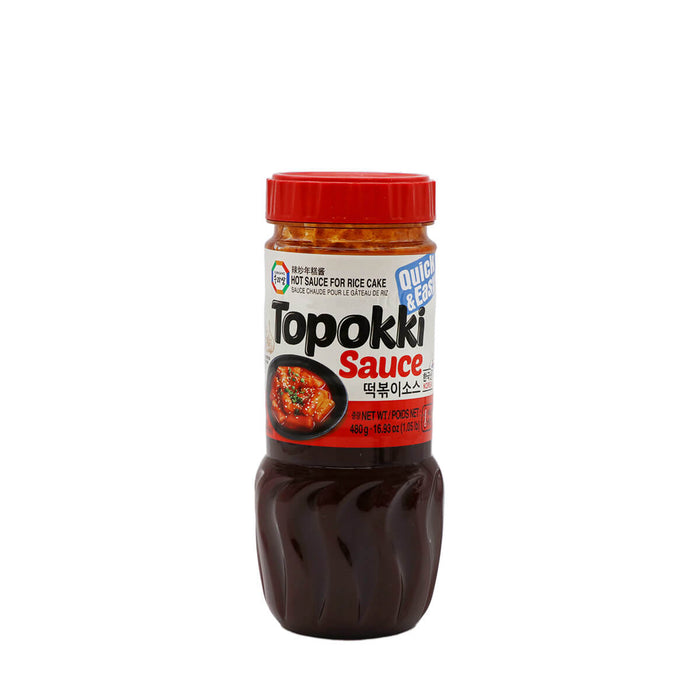
Skip the 6-Ingredient Sauce
Surasang Tteokbokki Sauce (16.93oz) ~$10 on AmazonThe sauce is the entire dish. Most people outside Korea use a pre-made sauce packet rather than blending gochujang, gochugaru, sugar, and soy sauce from scratch — it’s nearly identical and far faster.
Add rice cakes, water, and this sauce — simmer 8-10 minutes. The fastest way to get an authentic-tasting bowl without sourcing six separate ingredients.
How to Use
- Boil 2 cups sliced garaetteok (rice cakes) in 1 cup water for 3-4 minutes.
- Stir in 2-3 tablespoons of sauce until rice cakes are evenly coated and the sauce thickens.
- Add fish cake, green onion, or a boiled egg if you like — simmer 2 more minutes and serve hot.
Or Make the Sauce From Scratch
If you already have Korean pantry staples, the from-scratch version takes 10 minutes and tastes closer to what you’d get at a Seoul street cart. This is the classic 4-3-2 style ratio scaled for a normal serving:
From-Scratch Sauce (serves 2)
- Mix 3 tbsp gochujang, 1–2 tbsp gochugaru (start with 1 if you’re heat-sensitive), 1.5 tbsp sugar, 1.5 tbsp soy sauce, and 2 minced garlic cloves in a bowl.
- Bring 2 cups (500ml) anchovy or vegetable stock to a boil in a wide pan.
- Stir in the sauce mixture, simmer 1–2 minutes until the gochujang fully dissolves.
- Add 2 cups sliced garaetteok and simmer 8–10 minutes, stirring occasionally, until the rice cakes are soft and the sauce has thickened to coat them.
- Add fish cake, boiled egg, or green onion in the last 2 minutes if using.
Gochugaru isn’t optional here — it’s what gives the sauce its clean, bright heat rather than just fermented sweetness from the gochujang alone. Adjust the ratio to taste once you’ve made it once.
For the rice cakes themselves, look for “garaetteok” or “tteokbokki tteok” — they need to be the fresh or frozen cylindrical kind, not the flat sliced rice cakes used in tteokguk soup. If you’re cooking rice on the side too, this is the rice cooker I use for it.
Pairs Naturally With
If you’re building a Korean street food night at home, tteokbokki is almost always served alongside other staples.
Kimchi — the classic palate-cleansing side for anything this spicy. My kimchi guide is here.
And if tteokbokki’s spice level is exactly your kind of pain, you’ll want to see how it stacks up against Korea’s other famous spicy export: the Buldak noodle controversy.
Common Questions
What is tteokbokki made of?
Tteokbokki is made of cylindrical Korean rice cakes (tteok) simmered in a sweet and spicy gochujang-based sauce, typically with fish cakes (eomuk), boiled eggs, and green onion.
Who invented spicy tteokbokki?
The spicy gochujang version was invented by Ma Bok-rim in 1953 in Seoul’s Sindang-dong neighborhood, after rice cake accidentally fell into a pot of jajangmyeon sauce at a restaurant opening. She later set up a street stall selling the gochujang version, which became the dish known today.
Is tteokbokki very spicy?
Classic tteokbokki has a moderate, sweet-spicy heat from gochujang. Rose tteokbokki, which adds cream to the sauce, is significantly milder. It is generally less intensely spicy than Buldak instant noodles.
Where can I buy tteokbokki sauce?
Pre-made tteokbokki sauce, such as Surasang Tteokbokki Sauce, is available on Amazon and at Korean grocery stores, and lets you make an authentic-tasting bowl at home in under 10 minutes.
What does tteokbokki taste like?
Sweet, spicy, and savory all at once, with a chewy, slightly bouncy texture from the rice cakes. The gochujang base gives it a fermented depth, while gochugaru adds a cleaner, sharper heat on top. Rose and cheese versions mellow the spice with cream and dairy.
Is tteokbokki vegetarian or vegan?
The core sauce ingredients (gochujang, gochugaru, sugar, soy sauce) are plant-based, but most restaurant and traditional versions use anchovy-based stock and add fish cakes, which aren’t vegan or vegetarian. Make it with vegetable stock and skip the fish cake for a fully plant-based bowl.
Is tteokbokki gluten-free?
The rice cakes themselves are made from rice flour and are naturally gluten-free. The sauce is the catch — most soy sauce contains wheat, so use a gluten-free tamari instead if that matters to you. Double-check gochujang brands too, as some use wheat as a fermentation base.
How do I store and reheat leftover tteokbokki?
Refrigerate in an airtight container for up to 2 days. Rice cakes harden significantly once chilled, so reheat gently with a splash of water on the stove or in the microwave to loosen the sauce and soften the tteok back up — they won’t be quite as fresh as day one, but a low, slow reheat gets close.
The Gochujang This Sauce Is Actually Built On
Korea’s real best-selling brand — reviewed honestly, ingredients included.
See the Gochujang Review →Tteokbokki, Straight From a Real Market
Gwangjang Market is one of the best places in the city to eat it — a guided food tour gets you to the stalls locals actually rate.
See the Gwangjang Market Tour →Buldak Made International Headlines
Capsaicin warnings, recalls, and the actual fact-checked story.
Read the Buldak Story →Related Reading
Affiliate links — commission at no extra cost to you. Prices last checked June 2026.
Take our free 1-page Korea Pre-Flight Checklist — visas, apps, money, packing — from the team behind everything on this site.