

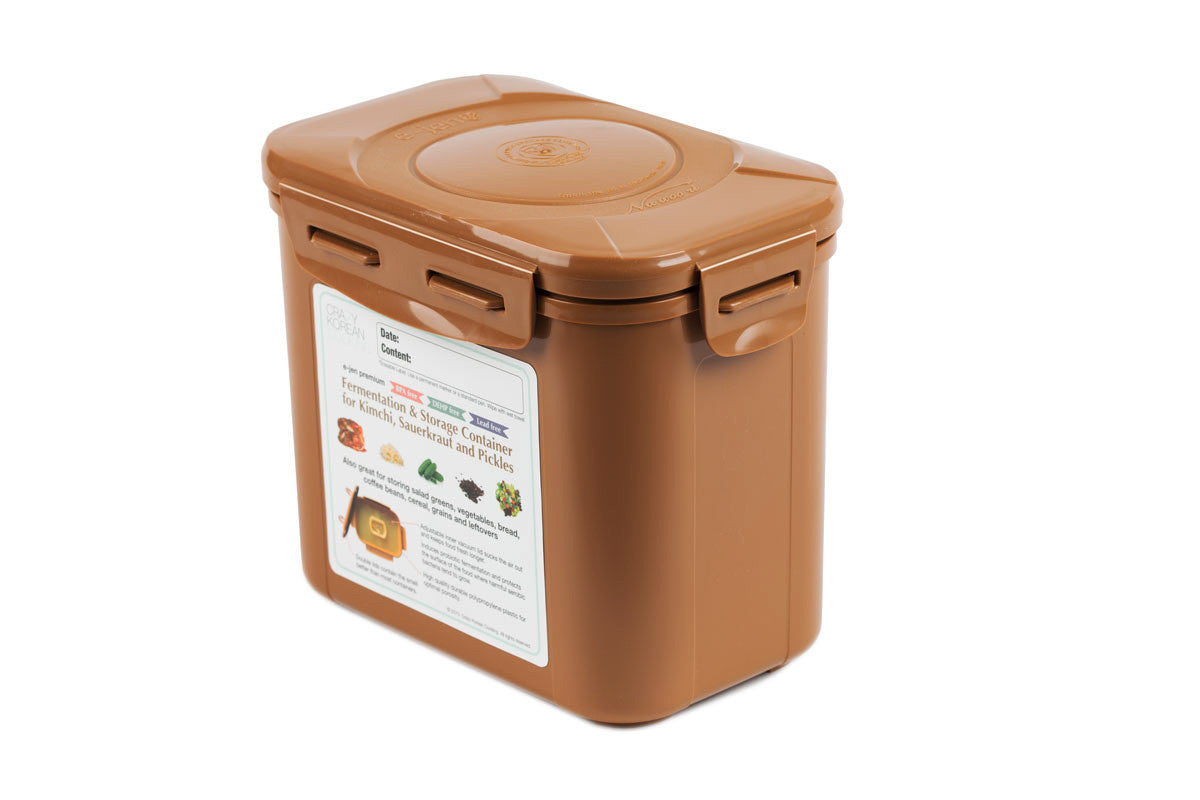
⚠️ Why a Regular Airtight Container Actually Works Against You
Kimchi fermentation produces CO2 as lactic acid bacteria break down sugars in the cabbage. A fully sealed container traps that gas with nowhere to go — pressure builds, and either the lid won’t stay shut or brine gets forced up and out every time you open it. A loosely closed container does the opposite problem: too much oxygen gets in, and you get mold instead of fermentation.
Traditional onggi (Korean clay pots) solved this centuries ago through microporosity — the clay itself breathes, releasing just enough gas while keeping oxygen mostly out. This container copies that same principle in food-grade plastic, using a double-lid design instead of porous clay: an inner vacuum-seal lid pushes air out and creates near-anaerobic conditions, while the outer lid manages the rest. Real published fermentation research backs this up — kimchi fermented in onggi-style vessels showed more stable acidity and measurably higher lactic acid bacteria counts by the fourth week compared to sealed plastic tubs.
🫙 Crazy Korean Cooking Fermentation Container — Full Review & Specs
The most-reviewed dedicated kimchi container on Amazon, built specifically to solve the CO2-and-brine problem above.
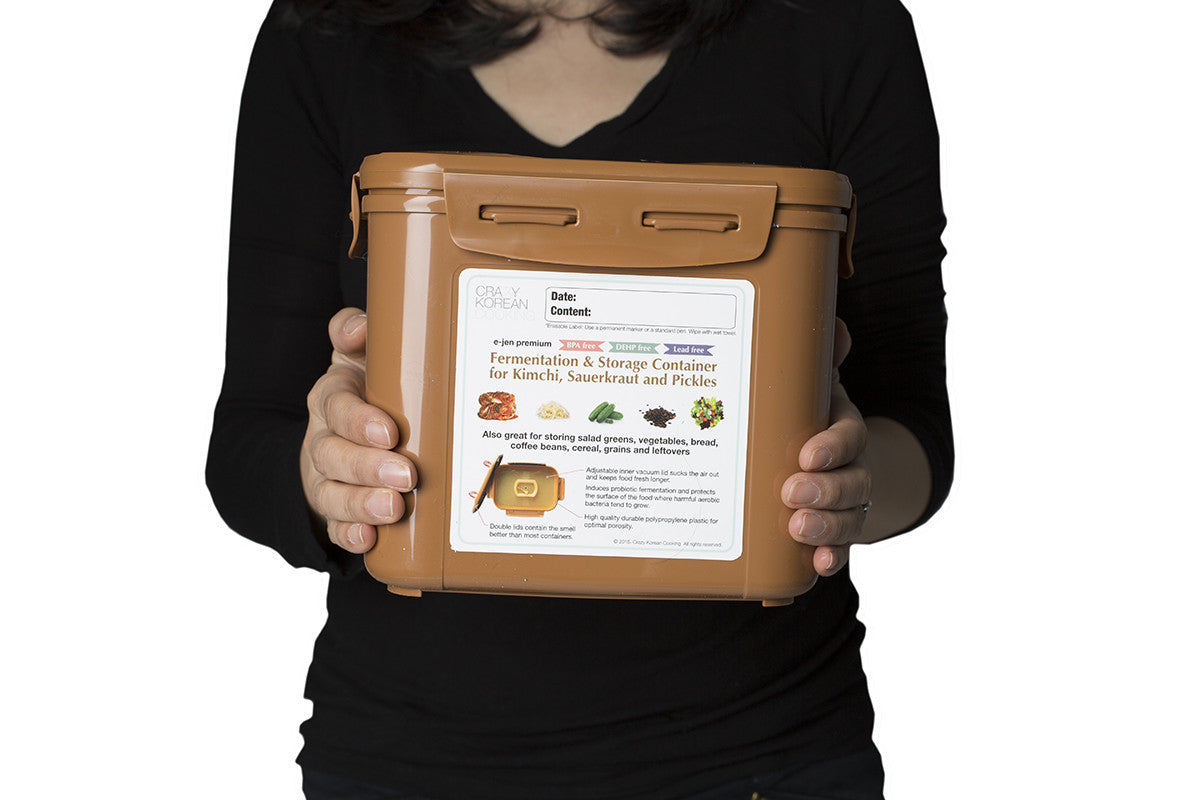
Real Product Photos
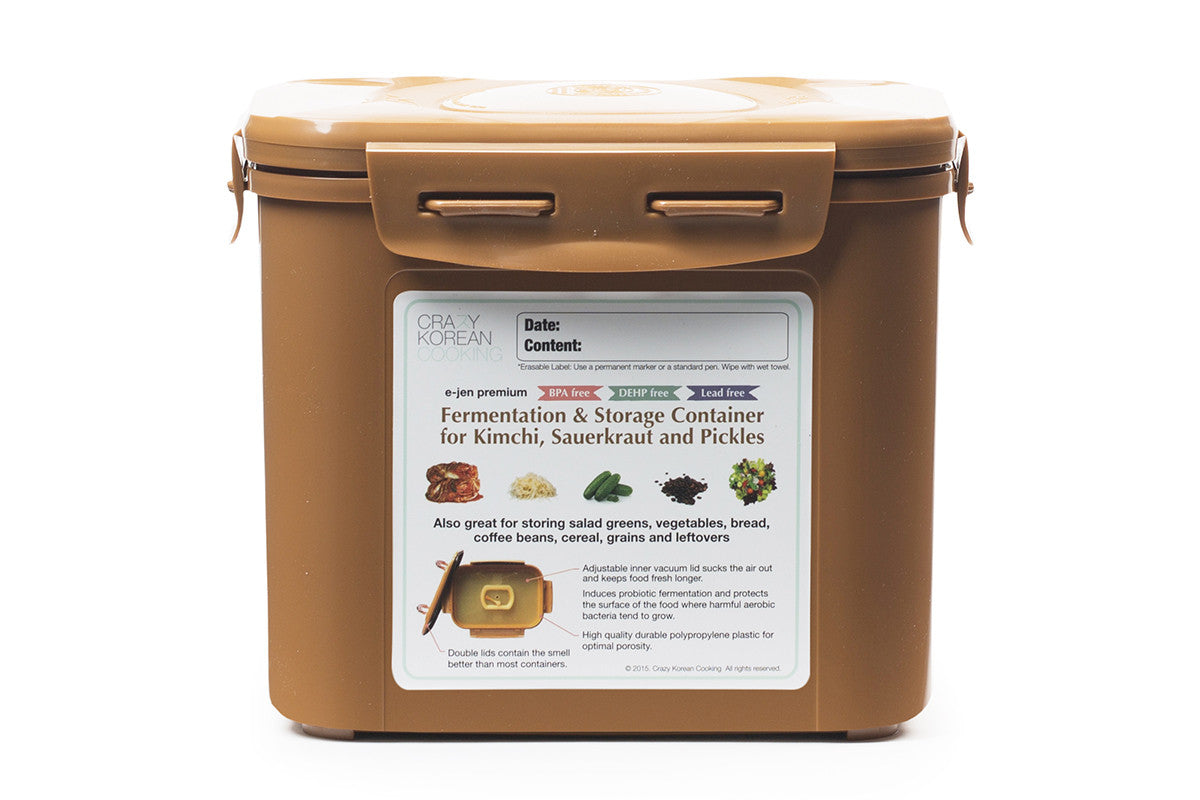
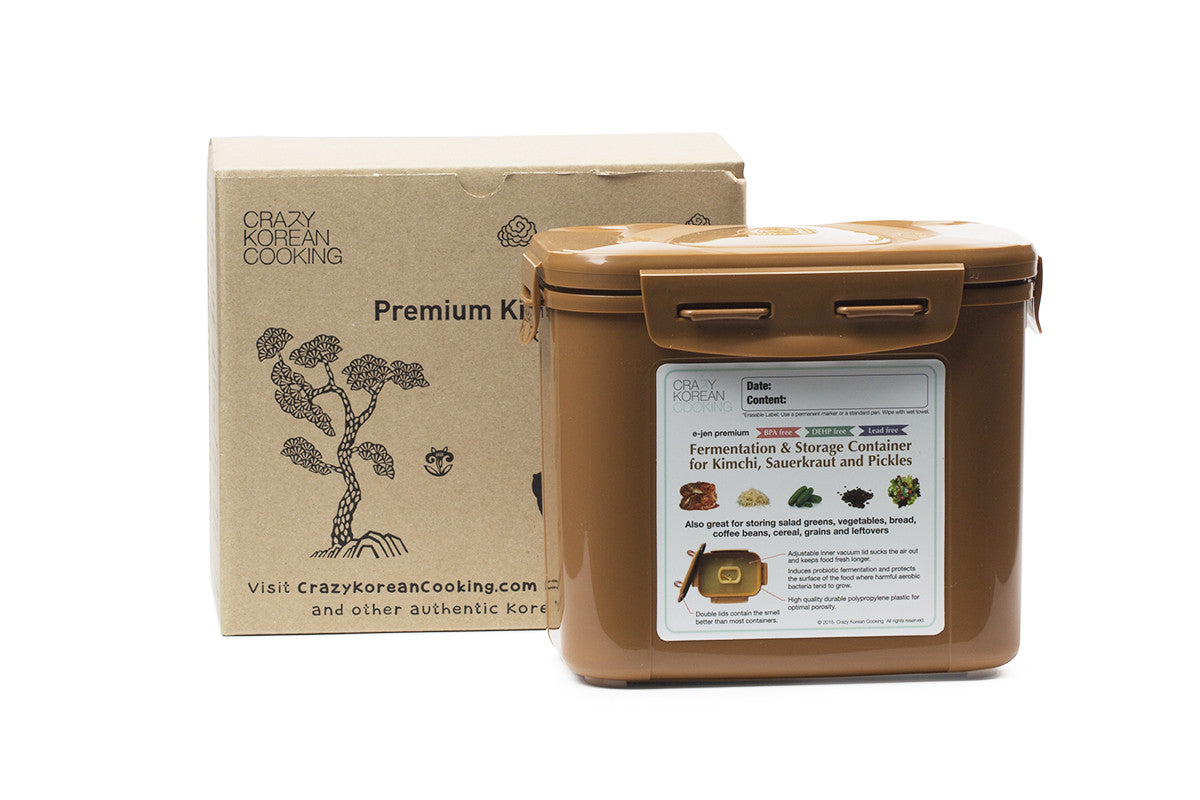
The double-lid system: inner vacuum-seal lid, outer smell-sealing lid — the two pieces that actually do the work.
📏 Which Size Do You Actually Need?
| Size | Good For | Cabbage Needed |
|---|---|---|
| 0.4 Gal (1.7L) | Testing a first batch, single person | ~1 small cabbage |
| 0.9 Gal (3.4L) — reviewed above | 1-2 people, regular home batches | ~2 medium cabbages |
| 1.3 Gal (5.2L) | A family of 3-4 | ~3 medium cabbages |
| 1.6 Gal (6.4L) | Larger households, batch-and-freeze cooks | ~4 medium cabbages |
| 11.8 Gal (45L) | Serious hobbyists, multi-family batches, small business | A full case of cabbage |
⚗️ How to Use It — Fermenting and Cleaning
🆚 This vs. Traditional Onggi vs. Plain Tupperware
| This Container | Traditional Onggi (clay) | Plain Tupperware | |
|---|---|---|---|
| Onggi-style porosity | Yes — clay-infused plastic | Yes — the real thing | No |
| Breaks if dropped | No | Yes — it’s ceramic | No |
| Odor containment | Strong (double lid) | Moderate | Weak — smells fill the fridge |
| Dishwasher safe | Yes | No — hand wash only | Yes |
| Price | ~$30 (2-pack) | $60-150+, imported | $10-15 |
Kimchi Container FAQ
Do you really need a special container to make kimchi?
No, you can technically ferment kimchi in any clean container. But a regular sealed container traps CO2 (causing leaks and mess) or lets in too much oxygen (causing mold), and open bowls let the smell take over your whole fridge. A container built for fermentation solves both problems at once — it’s not required, but it’s the difference between a clean process and a frustrating one.
Where should you store the container while it’s fermenting?
Room temperature, out of direct sunlight, for the first 1-2 days to kickstart fermentation. After that, move it to the refrigerator — cold temperatures slow the fermentation way down, letting you control how sour the kimchi gets over the following weeks.
Does the container need to be fully airtight?
No — and it shouldn’t be. Kimchi fermentation produces CO2 gas that needs somewhere to go. A fully airtight seal causes pressure buildup and brine leaks every time you open it. This container’s inner vacuum lid manages air exposure without fully sealing it, which is exactly the balance real onggi achieves through its porous clay.
How is this different from traditional Korean onggi?
Traditional onggi is fired clay that’s naturally microporous, letting small amounts of gas exchange through the material itself. This container recreates that same breathability using food-grade plastic blended with 7-10% natural clay, plus a mechanical double-lid system to do the rest. You get onggi’s fermentation benefits without the fragility, weight, or import price of real ceramic.
How long does homemade kimchi actually take to ferment?
1-2 days at room temperature for a mild, fresh ferment. For traditional sour, tangy kimchi, refrigerate after the initial room-temperature period and let it continue slowly for 2-4 weeks. It keeps developing flavor for months in the fridge — many Koreans prefer kimchi that’s been aging for over a month.
Can you use this for other fermented foods, not just kimchi?
Yes — the same double-lid, onggi-style design works for sauerkraut, pickles, and other vegetable ferments. It’s built around the same CO2/oxygen balance every lacto-fermented vegetable needs, not something kimchi-specific.
Stop Fighting Your Kimchi Container
Onggi-style porosity. Double-lid odor control. Dishwasher safe. The container that actually does what home kimchi-making needs.
🫙 Buy Kimchi Container on Amazon →Affiliate link — small commission at no extra cost to you. Prices last checked July 2026.
Not making your own yet? See the best ready-made kimchi to buy →
Take our free 1-page Korea Pre-Flight Checklist — visas, apps, money, packing — from the team behind everything on this site.