

Is American mahjong the same game as Chinese/Hong Kong mahjong? No — despite sharing tiles and a name, they’re genuinely different games. American mahjong adds Joker tiles, a tile-passing ritual called the Charleston, and requires matching your hand to a specific pattern from an annually-updated scorecard published by the National Mah Jongg League. Hong Kong (traditional Chinese) mahjong uses a fixed set of hand patterns everyone already knows, no Jokers, and no yearly card purchase. A set built for one will not play correctly under the other’s rules.
2 Real Sets — One for Each Game
Not two tiers of the same thing — two different games. Pick based on which one you actually want to play.
📊 The Real Differences
These are two genuinely different games that happen to share tiles and a name — not one game with two difficulty levels.
| American | Hong Kong / Traditional Chinese | |
|---|---|---|
| Tile count | 166 (includes Jokers & blanks) | 146 |
| Joker tiles | Yes — 10 tiles | None |
| The Charleston (tile-passing ritual) | Yes, required before play | No |
| Winning hands | Match a pattern from the NMJL card — changes every year | Fixed traditional hand patterns, same every year |
| Real extra cost to actually play | NMJL scorecard, ~$9-10/year, not included in any tile set | None — no card needed |
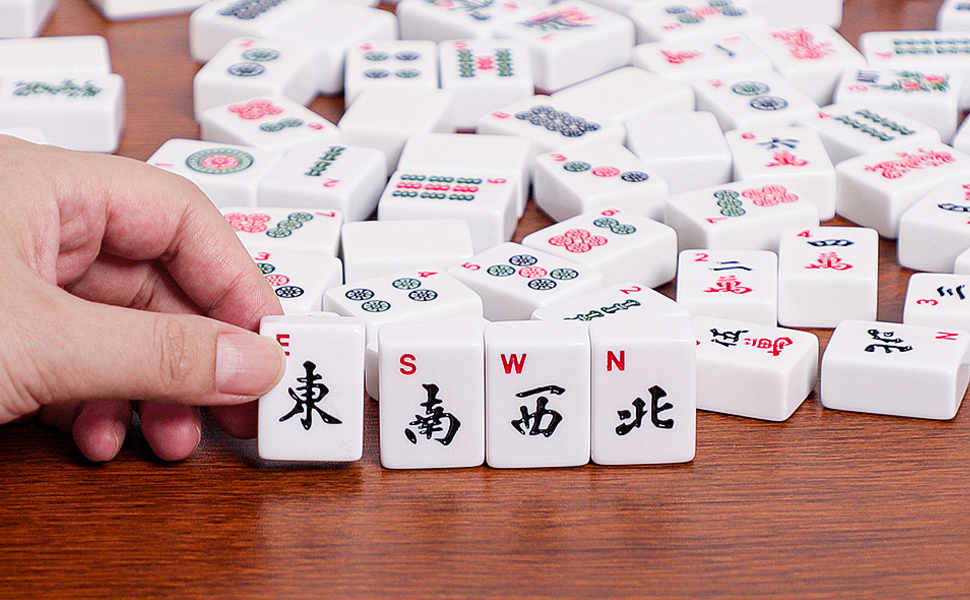
| Tile markings | Arabic numerals + Chinese characters — easier for beginners | Chinese characters only (except Flowers) — more traditional |
| Racks & pushers | Included (4, color-coded) | Not included on this set — buy separately |
| Can one set play the other’s rules? | No — explicitly incompatible rule systems | |
Two Real Games, Explained Honestly
🇺🇸 American Mahjong
4 players. Before play starts, everyone does the Charleston — passing 3 tiles right, then left, then across, trading away what you don’t need.
The goal is matching your hand to one of roughly 65-75 valid patterns printed on that year’s National Mah Jongg League (NMJL) card — a scorecard the League republishes every March. This is the part beginners miss: the winning hands genuinely change year to year, so you need the current card, and it’s sold separately from every tile set, including this one.
Jokers can substitute for most tiles in a hand. Play proceeds by drawing and discarding, and — unlike most mahjong variants — you can claim a discard from any player, not just the one before you, if it completes a valid exposed set.
🇭🇰 Hong Kong Mahjong
4 players, no Charleston. Everyone builds a wall from shuffled tiles, and play proceeds around the table drawing and discarding — you can only claim the discard directly before your turn, unless it completes a specific meld (Pung/Kong) or the winning hand itself, in which case any player can call it.
Winning hands are a fixed, traditional set everyone already knows — no annually-changing scorecard, no extra purchase. Scoring is based on point-value combinations (sets of the same suit, honor tiles, special hands) rather than matching a printed card.
No Jokers. Real, honest detail from actual reviewers: several first-time buyers of Hong Kong-style sets learned the traditional game specifically because the tiles use Chinese characters instead of Arabic numerals — a genuine side benefit if you want to pick up some Chinese numerals along the way.
Full Reviews
Mahjong’s real 2026 popularity surge has brought real counterfeit and mislabeled sets into the market — tiles sold as “premium melamine” that are actually cheap plastic, or sets marketed as one ruleset while missing pieces the other requires. Stick to sellers with a real, large review history (both picks here have 1,000+ verified ratings), and check that the listing photos show the actual tile engravings up close, not just marketing renders.
Mahjong FAQ
What’s the difference between American and Hong Kong mahjong?
American mahjong uses Joker tiles, a tile-passing ritual called the Charleston, and requires matching your hand to a pattern from an annually-updated National Mah Jongg League card. Hong Kong (traditional Chinese) mahjong has no Jokers, no Charleston, and uses a fixed set of hand patterns everyone already knows — no yearly card purchase needed.
Do I need to buy anything else to play American mahjong?
Yes — the National Mah Jongg League (NMJL) scorecard, republished every March for about $9-10. It’s not included in any tile set, including this one, but it’s essential — the valid winning hands genuinely change year to year, so an old card won’t match current official play.
Can I use a Hong Kong mahjong set to play American rules, or vice versa?
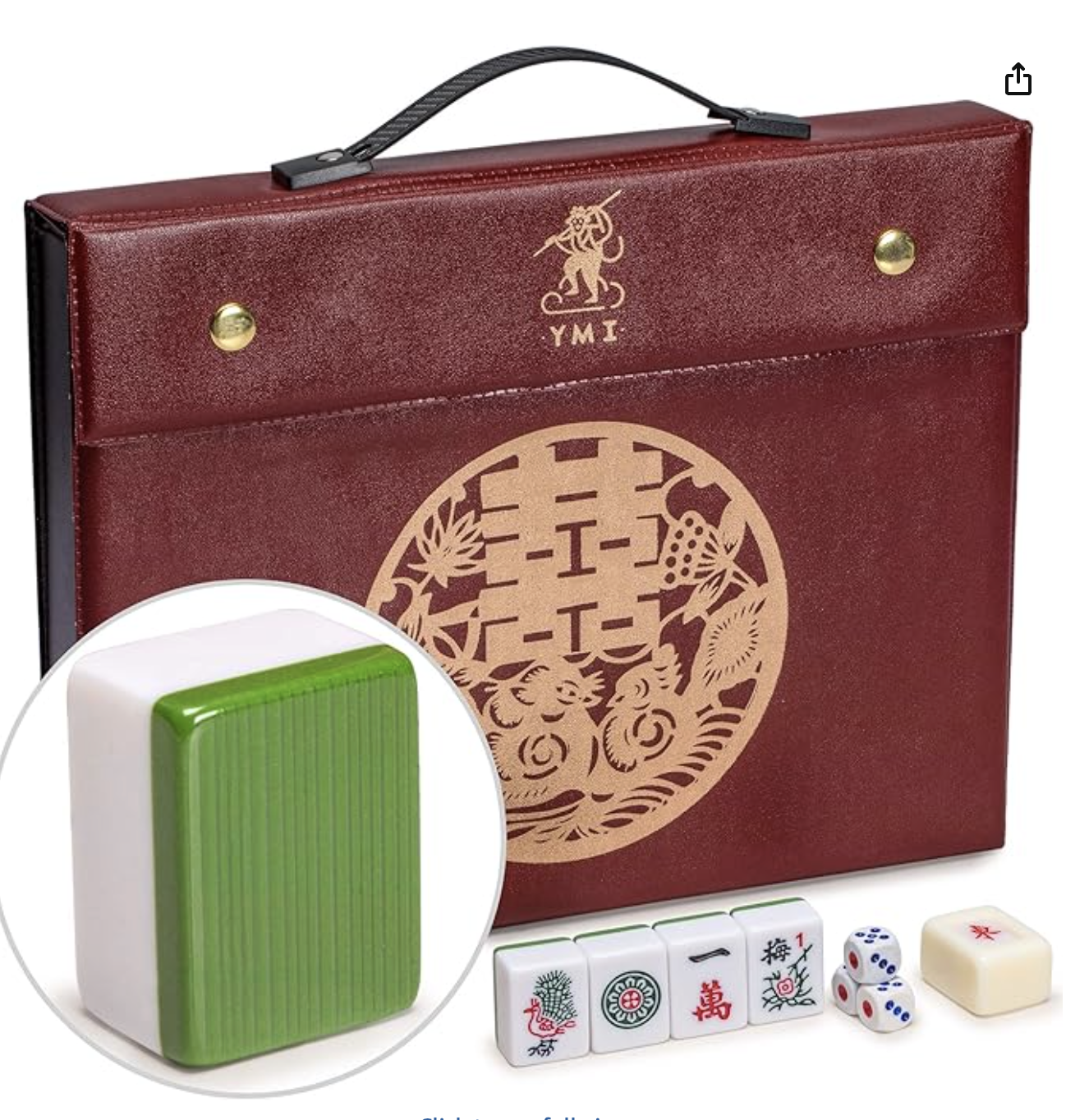
No. The Yellow Mountain Imports set is explicitly marketed as Chinese-only play and isn’t compatible with American or Japanese/Riichi rules — it lacks the Joker tiles American mahjong requires. Pick the set that matches the game you actually want to play.
Which one should I learn first?
If you’re in the US and want to join an existing group, it’s almost certainly American mahjong — it’s the more common social game here, with real momentum in recent years. If you want the traditional game played across Hong Kong and mainland China (and the one I actually learned living there), go Hong Kong-style — it’s arguably simpler to start since there’s no yearly card to track.
Do these sets come with racks and pushers?
The American GUSTARIA set does — 4 color-coded rack/pushers included. The Hong Kong Yellow Mountain Imports set does not; traditional play often just builds the wall on the table, but if you want racks, budget for them separately.
More From My Time in Asia
The Korea & Asia Travel Checklist
Everything I actually pack — gear, docs, food, DMZ essentials. Built from a year living in Seoul.
Take our free 1-page Korea Pre-Flight Checklist — visas, apps, money, packing — from the team behind everything on this site.