⚠️ Gochujang vs. Gochugaru vs. Sriracha — They’re Not the Same Thing
Gochugaru is just dried, ground Korean chili powder — a single ingredient, no fermentation. Gochujang is a fermented paste combining chili powder with glutinous rice, fermented soybean (meju), and salt — the fermentation is what gives it sweetness and depth that plain chili powder or a vinegar-based hot sauce like sriracha can’t replicate. If a recipe calls for gochujang and you use gochugaru instead, you’ll get heat without the body or sweetness the dish actually needs.
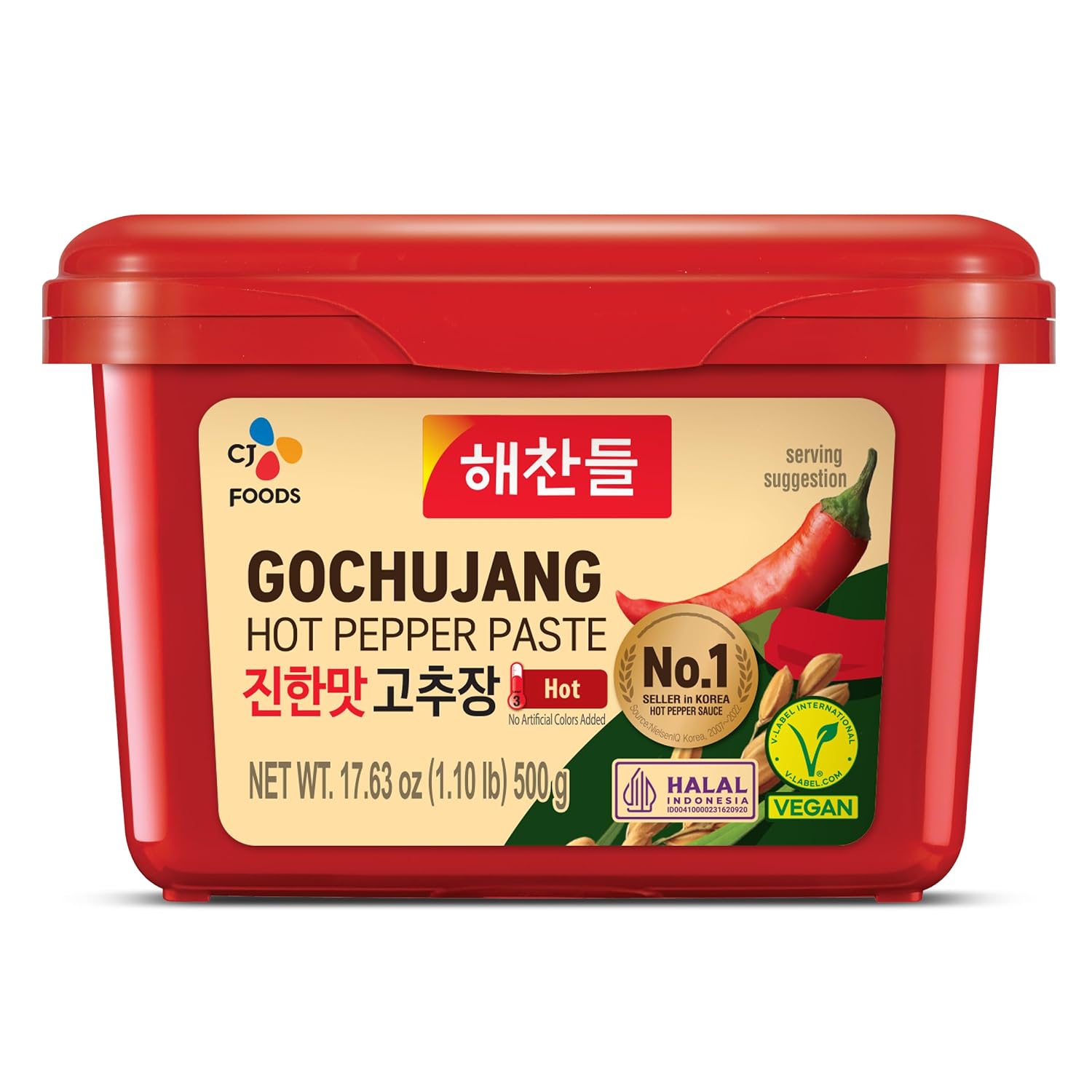
Traditionally, gochujang was fermented for months in outdoor onggi (clay pots) — the same fermentation principle behind proper kimchi fermentation. Mass-produced gochujang like this one speeds up that process industrially, which is exactly why the ingredient list is worth checking before you buy.
🔍 What’s Actually in the Jar — An Honest Look
This exact product’s ingredient list: wheat flour, corn syrup, water, hot pepper powder, salt, wheat, cooking rice wine, defatted soybean powder, koji. Contains wheat and soy.
Wheat flour appears twice in the ingredient list. If you need a gluten-free gochujang, this specific product isn’t it — check the label of any alternative carefully, since many mainstream brands use wheat too.
Some “clean label” boutique brands avoid corn syrup in favor of rice-based sweeteners only. This is the mass-market, everyday-cooking version — great flavor and the real, authentic taste most Korean households actually use, but not a health-food product.
No animal products in the ingredient list, and the jar carries a Vegan certification mark directly on the packaging.
Why recommend it anyway: this is the actual best-selling gochujang in Korea for over a decade running, not a Western-market reformulation — the taste is the real, authentic reference point everything else gets compared to. If ingredient purity matters more to you than authenticity and price, look for a boutique 100%-Korean-ingredient version instead, but expect to pay more and hunt harder for it.
🍚 What You Actually Make With It
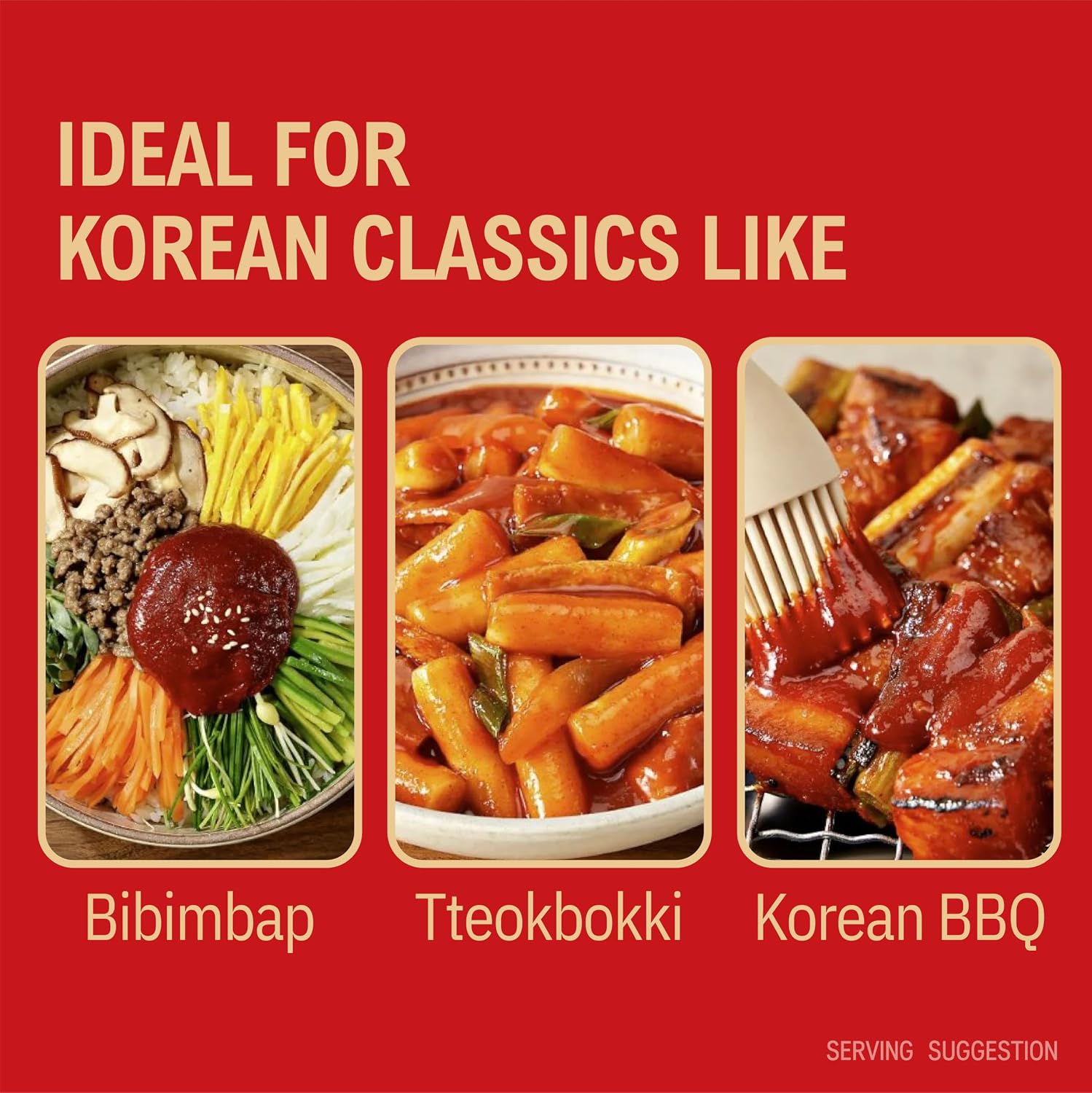
Tteokbokki
The base of the sauce for Korea’s #1 street food — rice cakes simmered in a gochujang-and-gochugaru broth. See our full tteokbokki guide for the real recipe.
Bibimbap
The spoonful of red paste in the middle of every mixed rice bowl. Mix it in fully before eating — that’s genuinely how it’s meant to be served.
Korean Fried Chicken & BBQ Marinade
Mixed with soy sauce, garlic, and a little sugar, it’s the base glaze for Korean fried chicken and grilled short ribs.
Beyond Korean Food
Stirred into mayo for a spicy dip, mixed into a marinade for non-Korean grilling, or added to instant ramen for real depth — genuinely versatile beyond traditional dishes.
🌡️ Heat Level and Storage
| Level | Name | Where This Product Sits |
|---|---|---|
| 1 | Mild Hot & Spicy | |
| 2 | Slight Hot & Spicy | |
| 3 | Medium Hot & Spicy | ← This one |
| 4 | Very Hot & Spicy | |
| 5 | Extreme Hot & Spicy |
Gochujang FAQ
Is gochujang the same as sriracha or other hot sauces?
No. Sriracha is a vinegar-based fresh chili sauce; gochujang is a fermented paste made from chili powder, glutinous rice, and fermented soybean. Gochujang is thicker, sweeter, and has a deeper savory flavor from fermentation that vinegar-based hot sauces don’t have.
What’s the difference between gochujang and gochugaru?
Gochugaru is plain dried Korean chili powder — one ingredient, no fermentation. Gochujang is a fermented paste that includes chili powder as just one component alongside rice and soybean. They’re not interchangeable in recipes; gochujang brings sweetness and body that gochugaru alone can’t.
Is this specific product gluten-free?
No — this product’s ingredient list includes wheat flour and wheat. If you need a gluten-free gochujang, check labels carefully, since wheat is common across many mainstream brands, not just this one.
How spicy is it really?
This product rates as Level 3, “Medium Hot & Spicy,” on the brand’s own 5-level heat scale — noticeably spicy but not extreme. It’s milder than many Western hot sauces per spoonful, since the sweetness and thickness balance the heat.
What can I substitute if I don’t have gochujang?
There’s no perfect substitute since the fermentation flavor is hard to replicate, but a mix of miso paste, a little sugar, and chili powder or sriracha gets closer than any single ingredient alone. It won’t be identical, but it works in a pinch for most recipes.
Does it need to be refrigerated?
Not before opening — it’s shelf-stable unopened for 1-2 years in a cool, dark pantry. After opening, refrigerate it and expect 6-12 months of good quality.
Stop Using the Wrong Red Sauce
Korea’s actual best-selling gochujang. 4.6★, 8,200 ratings. The real base for tteokbokki, bibimbap, and Korean BBQ.
🌶️ Buy Gochujang on Amazon →Affiliate link — small commission at no extra cost to you. Prices last checked July 2026.
Also Worth Reading
Take our free 1-page Korea Pre-Flight Checklist — visas, apps, money, packing — from the team behind everything on this site.