Best Universal Travel Adapter for Asia 2026 — China, Japan, Korea & More
Best Asia Adapter — 2026
Best Universal Travel Adapter for Asia — China, Japan, Korea & More
Every country in Asia uses a different socket. China, Japan, Korea, Thailand, Singapore — none of them match. The right Asia adapter solves all of it in one purchase. Here is exactly which one to get and why.
Real prices, real ratings — no guessing which one to get
150+
Countries Covered
8
Asia Socket Types
USB-C
+ USB-A Ports
1
Adapter for All of Asia
The Problem
Asia Has No Standard Socket — Every Country is Different
I learned this the hard way on my first trip. Landed in China with a European plug, hotel reception handed me an adapter for 3 days, I returned it on checkout. Next stop Japan — different socket. Singapore — different again.
A universal travel adapter (also spelled “adaptor” outside the US, and sometimes called an outlet adapter or plug adapter) is not optional if you are hopping countries. It is the one thing you pack once and never think about again. One adapter covers China, Japan, Korea, Thailand, Vietnam, Singapore, Taiwan and Indonesia.
🔌 All plug types built in
Type A, B, C, G, I — slides in and out. No loose parts to lose.
⚡ USB-C + USB-A ports
Charge your phone, laptop and power bank simultaneously without extra cables.
🛡️ Built-in surge protection
Asian power grids can be unstable. Surge protection protects your devices.
✈️ Compact and carry-on safe
Fits in any travel bag. No screwdrivers, no assembly, works in seconds.
🔌 Best Travel Adapters for Asia — 2026 Comparison
Ranked for Asia specifically — Japan/Korea/China/SE Asia plug types.
Compact enough to forget it’s in your bag. Covers every socket in Asia and beyond. USB-C and USB-A ports so you can charge multiple devices without carrying a power strip. I’ve used it across China, Japan, Korea and Southeast Asia without a single issue.
Works in 150+ countries — one adapter for your entire trip, no matter where you end up.
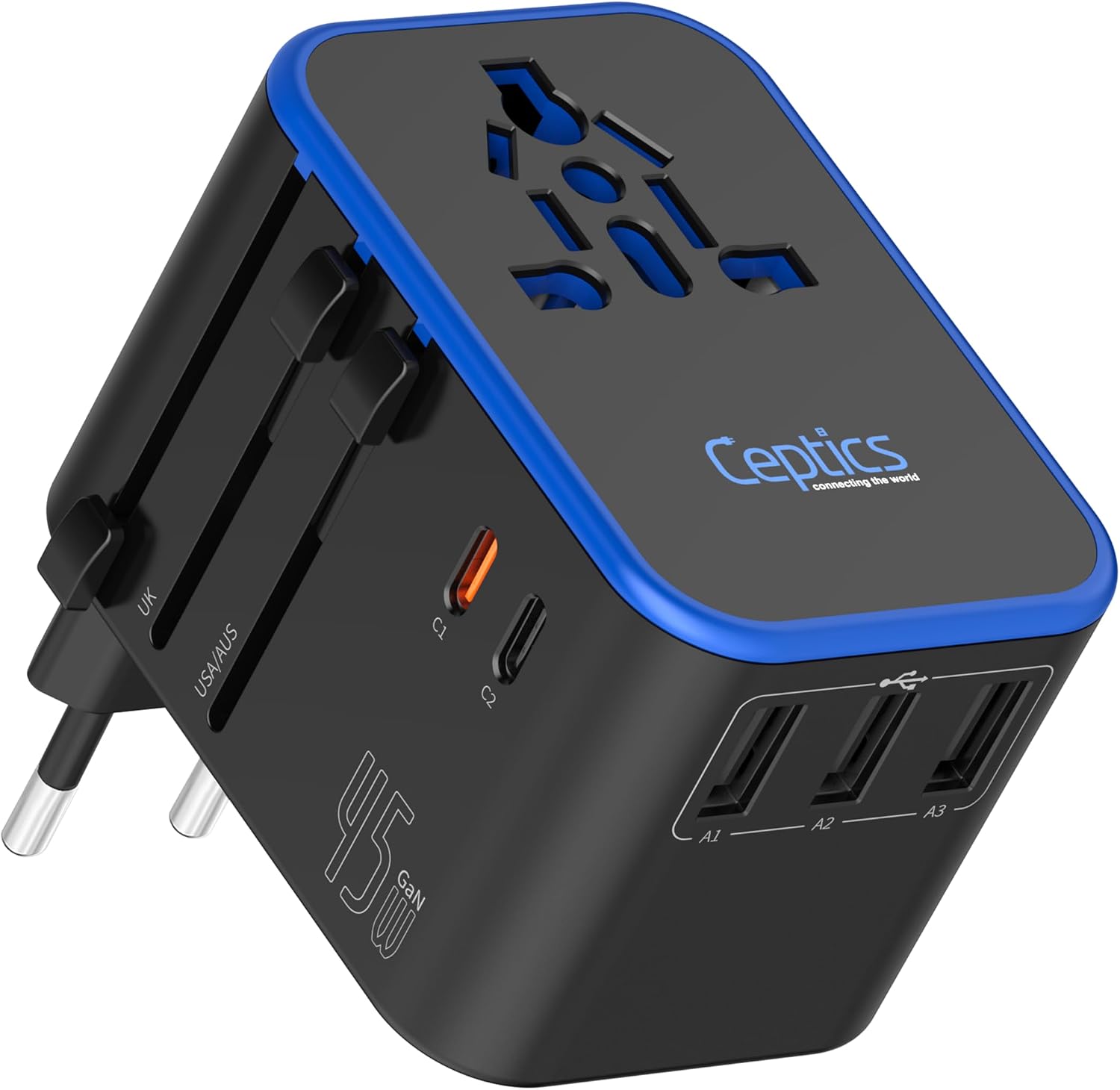
A genuine 45W GaN adapter — runs cooler and smaller than older silicon designs — and it’s by far the most-reviewed adapter on this list at 18,091 ratings, FCC/CE/RoHS certified with an 8A fuse (spare included) and shutter protection. Covers Type A, C, G and I sockets — the four you’ll actually hit across Asia.
★★★★★“It was the only travel adapter I used for a six month trip to New Zealand, Nepal, India, and different parts of Asia… Used it for six months straight, threw it into backpacks and purses, and it’s held up great with no issues!”— Eileen, verified buyer
✓ Pros
Most-reviewed adapter here — 18,091 ratings at 4.6★
Genuine 45W GaN — runs cooler, smaller than old-style adapters
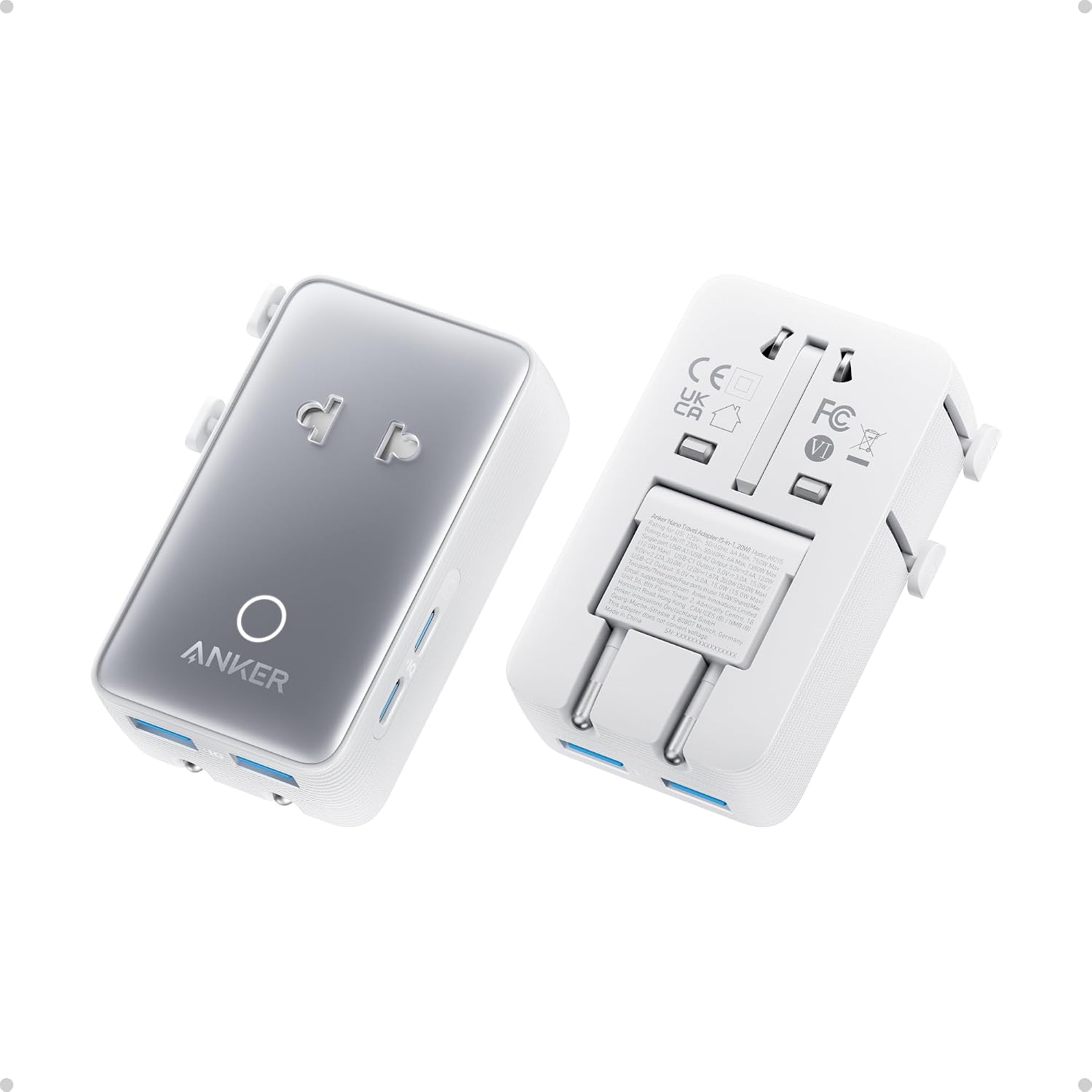
Anker’s smallest travel adapter — credit-card sized, 5 outputs (1 AC outlet, 2× USB-A, 2× USB-C) from one compact block. Covers Type A (US/Canada/Japan/China), Type C (EU/Korea-compatible), Type G (UK/Singapore) and Type I (Australia). 20W total output — enough for phones and small electronics, not laptops. Comes with an 18-month warranty.
★★★★★“Very practical with its 4 outlets, lightweight, small, ideal for trips abroad. I tested it in Singapore, Taiwan and China — it worked perfectly.”— Jeff, verified buyer (translated from French)
✓ Pros
Smallest, lightest option on this list
Confirmed working in Singapore, Taiwan & China by a real buyer
I’ve personally used both across trips through Hong Kong, Korea, Japan, Taiwan and Singapore. Full video below — real independent lab data on conversion efficiency, thermal testing, and wattage-split measurements, not just marketing claims.
🤔 Ceptics or Anker — Which Should You Actually Buy?
Get the Ceptics if…
You’re charging multiple devices at once (phone + laptop + earbuds), want the most-proven option with 18,091 real ratings behind it, or you’re travelling for weeks and want a backup fuse included in the box.
Get the Anker if…
You’re packing light and only need to keep a phone, earbuds and a watch charged. It’s genuinely credit-card sized — the one to grab when every gram in your bag counts.
Both are real, verified-buyer favourites — this isn’t a case of one being bad. Van2000 used the Ceptics “in US, UK, UAE and India” on a single trip and called it “very convenient and reliable” — just note, as they point out, “it’s a 45W charger, it cannot charge your laptops” at full speed if you’re running several devices off it simultaneously. Tasha Farkas Hinecker packed it specifically for a trip to Curaçao and reported charging three devices at once “really well and really fast,” with no issues through airport security either way. On the Anker side, felipejosec highlighted the build quality directly: “it feels sturdy without being bulky… I never had any issues with loose connections or overheating” — echoing Anker’s general reputation for reliability in this category.
Which Socket Does Each Country Use?
This is exactly what you get wrong if you don’t research before packing. A universal adapter means you never need to check.
🇨🇳
China
Type A + I
Flat parallel or angled pins — EU/UK plugs do NOT fit
🇯🇵
Japan
Type A
Same as USA — but voltage is 100V, use a converter for high-watt devices
🇰🇷
South Korea
Type C + F
Round pins — same as most of Europe
🇹🇭
Thailand
Type A + B + C
Mix of flat and round — universal adapter always works
🇻🇳
Vietnam
Type A + C
Flat or round — inconsistent across regions
🇸🇬
Singapore
Type G
Same as UK — three rectangular pins
🇹🇼
Taiwan
Type A
Same as USA/Japan — flat parallel pins
🇮🇩
Indonesia
Type C + F
Round pins — same as Europe
China specific warning: Chinese airports confiscate power banks without CCC certification. Your adapter is fine — but make sure your power bank is CCC approved. See the CCC-certified power bank I use →
What It Looks Like — Universal Travel Adapter
What You Get
🔌
Universal socket on top Accepts Type A, B, C, G, I — every plug type in Asia and beyond
⚡
USB-C + USB-A ports built in Charge your phone and laptop without an extra power strip
🌍
150+ countries covered China, Japan, Korea, Thailand, Singapore, UK, Europe, USA — one adapter
🛡️
Built-in surge protection Protects your devices from unstable Asian power grids
✈️
Compact — fits in any travel bag No screwdrivers, no loose parts. Works in seconds.
Affiliate link — I earn a small commission at no extra cost to you.
⚡ Adapter vs Converter — Don’t Fry Your Devices
⚠️ Critical Difference
A travel adapter changes the plug shape. A voltage converter changes the electricity itself. You need to know which one you need.
🔌 Travel Adapter (plug shape only)
Changes the physical plug shape so it fits the local socket. Does NOT change voltage. Safe for dual-voltage devices (100-240V) — which includes most modern laptops, phone chargers, and cameras.
✓ Use this for: iPhone, MacBook, Samsung, Sony camera — anything labelled 100-240V
⚡ Voltage Converter (changes electricity)
Changes 220V to 110V (or vice versa). Needed only for older single-voltage devices like some hair dryers, shavers, and kitchen appliances. Heavy, bulky, and usually not needed by most travellers.
⚠️ Check label first: if it says “100-240V” you only need an adapter, not a converter
🗺️ Asia Voltage by Country
Country
Voltage
Plug Type
Frequency
Adapter Needed?
🇯🇵 Japan
100V
Type A (flat 2-pin)
50/60Hz
Yes — US plugs fit but voltage is low
🇰🇷 South Korea
220V
Type C/F (round 2-pin)
60Hz
Yes — US plugs need adapter
🇨🇳 China
220V
Type A/C/I (various)
50Hz
Yes — most complex socket mix
🇹🇭 Thailand
220V
Type A/B/C
50Hz
Usually not needed (Type A often works)
🇸🇬 Singapore
230V
Type G (UK-style)
50Hz
Yes — unique UK-style plug
🇭🇰 Hong Kong
220V
Type G (UK-style)
50Hz
Yes — UK-style plug
🇯🇵 Note on Japan
100V only
Japan is the ONLY country in Asia running 100V. Most dual-voltage devices (100-240V) still work fine — but charge slightly slower. Hair dryers rated 120V only may overheat.
⚡ GaN Technology — Why It Matters for Asia Travel
Old silicon adapters
Run hot, bulky, slow charging. A 65W silicon adapter is the size of a large apple. Gets warm enough to be uncomfortable in your hand. Most USB-A only — no USB-C fast charge.
GaN (Gallium Nitride) adapters
Half the size, runs cooler, 2× faster charging. A 65W GaN adapter is smaller than an AirPods case. USB-C Power Delivery charges MacBook in under 2 hours. Now costs ~$35-55.
💡 Asia Travel Power Tips — From Experience
🇯🇵 The Japan Hair Dryer Problem
Japan runs on 100V. Most Western hair dryers are rated for 110V minimum. Plug a 110V dryer into Japan and it runs slow and weak — or burns out. Check your device label before you go. Korean hotel hairdryers are fine at 220V.
🔌 The Power Strip Hack
Bring ONE travel adapter + ONE small power strip. Plug the adapter into the wall, power strip into the adapter — suddenly you have 4-6 outlets from one adapter. Works in any country and costs $8.
🇨🇳 China’s Mixed Sockets
China uses 3 different socket types (Type A, C, and I) — sometimes all in the same hotel room. A universal adapter handles this. Don’t assume you’re fine because you visited once before.
🛡️ Check Safety Certifications
Look for CE, FCC, or BS8546 certification. Uncertified cheap adapters from Amazon marketplace sellers have caused fires. Pay $20 for a certified adapter — not $5 for a potential hazard.
Common Questions
Is “travel adaptor” the same as “travel adapter”?
Yes — “adapter” and “adaptor” are just US vs UK/Commonwealth spellings of the same word. You’ll also see the same product called an “outlet adapter” or “plug adapter.” All of these refer to the same device: something that lets a plug from one country’s socket fit into another country’s outlet.
Do I need a voltage converter for Asia?
Most modern electronics (phones, laptops, cameras) are dual voltage (100-240V) — check the label on your charger. If it says 100-240V you just need the adapter. Japan runs on 100V which is unusual — high-watt devices like hair dryers may need a converter.
Will this adapter work in China specifically?
Yes — China uses Type A (flat parallel) and Type I (angled flat) sockets. A universal adapter covers both. Note that China runs on 220V, same as Europe, so most modern devices handle it fine without a converter.
Can I use it in airports and hotels?
Yes. Hotels in Asia almost always have at least one Type A socket alongside local ones. The USB ports on the adapter also work without plugging into the wall — useful for charging from a power bank during flights.
Don’t wing the rest of it. The Korea Trip Planner (PDF) has a 7-day Seoul itinerary, packing checklists, budgeting and more — everything mapped out in one printable file.