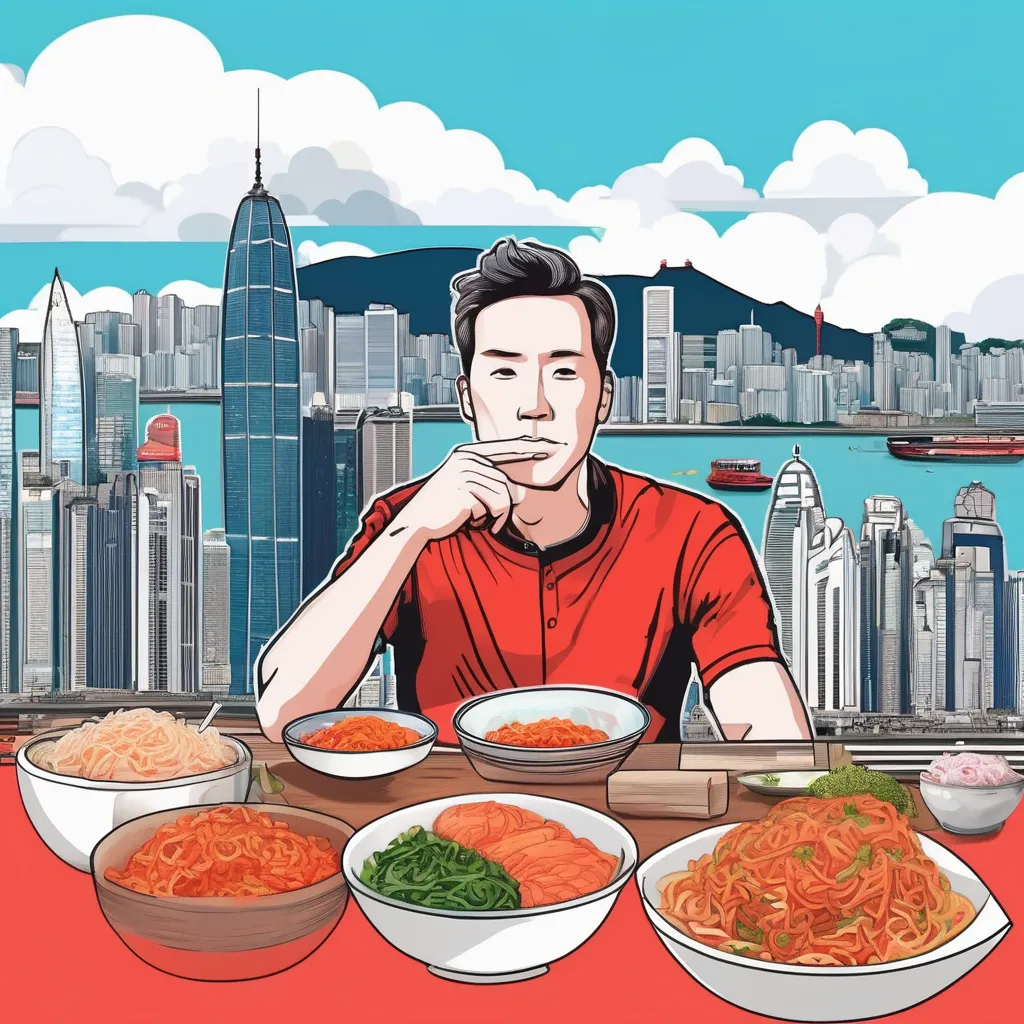
One Year Living in South Korea: What I Ate, Bought, and Would Do Again
KAIST University, Daejeon. Shin Ramen 3× a week. The honest account.
I spent a year studying at KAIST — the Korea Advanced Institute of Science and Technology — in Daejeon, South Korea. Before that, I had lived in Hong Kong for a year and a half. Between the two, I spent roughly two and a half years living in Asia. This is what I ate, what I used every day, and what I still order online now that I am back in Europe.
Arriving in Korea: The First Week
Daejeon is not Seoul. This is important to say because most content about living in South Korea is written by people in Seoul, for people moving to Seoul. Daejeon is South Korea’s fifth-largest city and sits roughly in the geographic centre of the country. It is cleaner, quieter, cheaper, and in many ways more representative of how most Koreans actually live than the capital.
KAIST is a research university. The campus is self-contained, extremely well-equipped, and operates largely in English at the graduate level. What is unusual is the pace — KAIST has a reputation for intensity that is entirely deserved. Students work late. The campus convenience stores are busy at midnight. Shin Ramyun is everywhere.
Shin Ramyun: The Unofficial Food of KAIST
I ate this at least three times a week at KAIST. At 2am after a long day in the lab, it is exactly what you want. The Amazon version is the same product. ~$1.40 per bowl in bulk.
Shin Ramyun is made by Nongshim and has been South Korea’s best-selling instant noodle for over thirty years. It is not the same as the instant noodles you buy at a Western supermarket. The broth is genuinely spicy, deeply savoury, and has a complexity from dried mushrooms, beef extract, and Korean chilli that most instant noodles never approach. The noodles are thick, wheat-based, and hold texture if you do not overcook them.
Korean students eat it in specific ways. A raw egg cracked into the boiling broth, lid closed for one minute, produces a soft-set egg that enriches the whole thing. A slice of processed cheese melted on top sounds wrong and tastes completely right. Cold rice pressed into the leftover broth after the noodles are gone — this is standard. Zero waste.
Cooking in a University Dormitory
KAIST dormitory rooms have a desk, a bed, a wardrobe, and not much else. Cooking facilities are shared and minimal. There is no space for a full rice cooker. There is always a microwave.
Add rice, add water to the marked line, microwave for twelve minutes, rest for two. The rice it produces is far better than anything managed on a hob, and it works for jasmine, basmati, brown rice, and quinoa. I used mine almost every day. I bought a second one when I got back to Europe.
Jeju Island and OSULLOC Matcha
During a break from KAIST I took a trip to Jeju Island — the volcanic island off the southern tip of the Korean Peninsula. Jeju is famous for its black lava coastline, its tangerine orchards, its hiking, and, for anyone who pays attention to tea, the OSULLOC tea plantation.
OSULLOC was founded in 1979 by Amorepacific Corporation, Korea’s largest beauty and lifestyle company. They established South Korea’s first modern green tea plantation on Jeju’s volcanic basalt terrain. The soil is mineral-rich, the climate is temperate and misty, and the result is a matcha with a flavour profile distinct from Japanese ceremonial matcha — smoother, less bitter, with a faint mineral quality that comes directly from the volcanic earth.
The OSULLOC Tea Museum on Jeju is one of the most-visited attractions on the island. Their Volcanic Isle matcha changed how I think about green tea. Add to any milk, hot or cold: the best matcha latte you will ever drink. 4× winner at the North American Tea Championship.
Everyday Life in Korea: What Surprised Me
Things That Genuinely Surprised Me
- Convenience stores are extraordinary — CU, GS25, 7-Eleven serve real hot food. Tables. Actual meals.
- Public transport is exceptional — Seoul to Daejeon by KTX in 50 minutes. Subways among the cleanest in the world.
- The language barrier is real but manageable — Papago app (by Naver) is better than Google Translate for Korean.
- Food quality across all price points — street stall for $2 or restaurant for $8, the gap is smaller than anywhere in Europe.
- It is very safe — I left my laptop on a library table for an hour. Exactly where I left it.
Hong Kong vs South Korea: What I Noticed After Living in Both
I lived in Hong Kong for a year and a half before South Korea. They are different in almost every way despite both being dense, prosperous, East Asian cities.
Hong Kong is faster, louder, more international, and more expensive. Cantonese culture is distinct and Hong Kong identity is strong. The food — particularly dim sum and char siu — is world-class. The public transport is probably the best I have encountered anywhere. The hiking is spectacular and underappreciated.
South Korea is more cohesive culturally and considerably cheaper. Seoul is enormous but navigable. The food culture is different but equally serious. The seasons are more pronounced — genuinely cold winters, genuinely hot and humid summers.
Both were worth the time. I would go back to either without hesitation.
What I Still Buy From That Year
Looking at what I have ordered online since returning to Europe, the pattern is clear. The things I actually miss from daily life in Korea are inexpensive and repeatable:
- Nongshim Shin Ramyun in bulk — the 20-pack on Amazon is the same product at roughly the same price I was paying in Korean supermarkets.
- OSULLOC Jeju Matcha — for matcha lattes at home. Nothing else I have tried in Europe tastes the same.
- The Joseph Joseph rice cooker — I use it at least four times a week. Perfect rice in twelve minutes.
- Kimbap (how to make it at home) — you cannot buy the fresh version outside Korea but you can make it. It became one of the foods I missed most after leaving.
That is the honest list. Not everything I encountered in Korea is available or worth importing. But these three things slot into daily life in a way that makes sense regardless of where you live.
On the practical side, two things I wish I’d brought on day one instead of buying confused at Incheon: a decent power bank (Korea is a phone-dependent country — subway, payments, everything), and a universal travel adapter that actually fits Korean outlets without wobbling.
Quick Questions
Is KAIST a good university for international students?
Yes, particularly at graduate level. KAIST operates largely in English for postgraduate programmes and has strong international research partnerships. The campus in Daejeon is self-contained with dormitories, cafeterias, and good facilities. The academic pace is intense — KAIST has one of the most demanding reputations in Asia.
Is Daejeon worth living in compared to Seoul?
For students or researchers, Daejeon is excellent — cheaper, cleaner, quieter, and more representative of everyday Korean life than Seoul. The KTX bullet train gets you to Seoul in 50 minutes. The main downside is fewer English speakers and less international nightlife. If you want the full Seoul experience, Daejeon requires day-trips rather than being central.
What is the cost of living in South Korea for a student?
At KAIST in Daejeon, you can live comfortably on 700,000-1,000,000 KRW per month (roughly $530-750 USD). Dormitory rooms are subsidised. Convenience store meals (Shin Ramen, kimbap, triangle onigiri) are $1-3 each. The main expenses are transport to Seoul and social activities.
What Korean food should I try first when living in South Korea?
Start with Shin Ramen (the iconic spicy instant noodle, available everywhere), kimbap (rice and fillings rolled in seaweed, under $1 at any GS25 or CU), and bibimbap (rice bowl with vegetables and gochujang). These are everyday Korean staples, not tourist-facing dishes.
How different is living in South Korea compared to Hong Kong?
Very different despite both being prosperous East Asian cities. Hong Kong is faster, louder, more international and more expensive with a distinctly Cantonese culture. South Korea is more culturally cohesive, considerably cheaper, and more seasonal — genuinely cold winters, hot humid summers. Both have exceptional public transport and food scenes.
Planning a Korea Trip?
Don’t arrive at Incheon hunting for a SIM card. I use Holafly eSIM — scan a QR code before your flight, land with full data. Unlimited, no caps, works the moment you clear customs. Code KIMCHIBOY = 5% off.
One printable page — everything to do 30/14/7 days before your flight, packing musts, and day-one steps. Drop your email and it's yours.