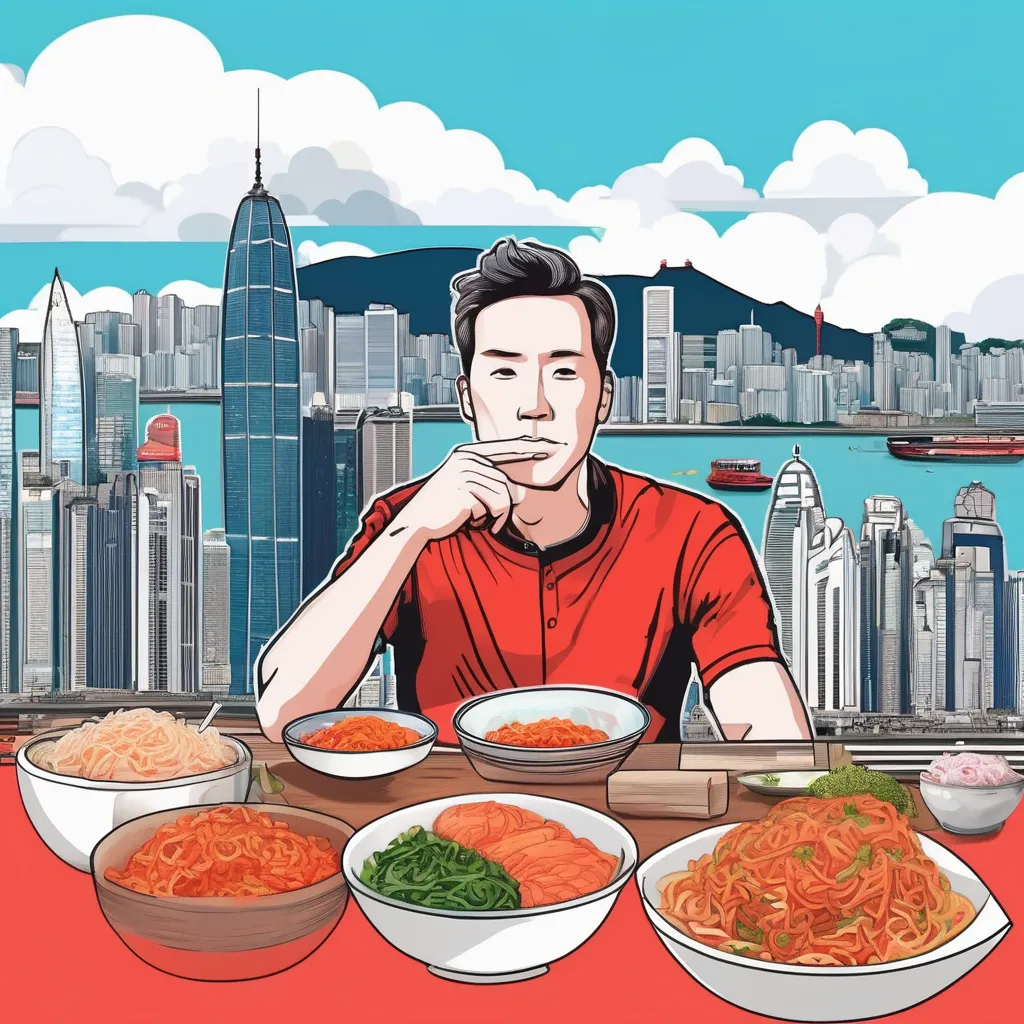
Is Jongga kimchi pasteurized? No — Jongga is sold refrigerated and unpasteurized, meaning its 1–10 billion CFU of live Lactobacillus bacteria per 100g serving are still alive when you eat it. That’s the whole point: pasteurized supermarket kimchi is heat-treated for shelf stability, which kills every live culture in it. Jongga is good for you specifically because it skips that step — it supports gut health, has anti-inflammatory properties from garlic and ginger, and studies show regular kimchi consumption improves skin clarity.
🥬 Jongga Kimchi — Full Review & Specs
Korea’s #1 kimchi brand — unpasteurized, live cultures, authentic fermentation. This is the one I actually buy.
🥬 Best Kimchi Brands Compared — 2026
How Jongga stacks up against the other top kimchi brands available online.
| Brand | Origin | Probiotics | Taste | Best For |
|---|---|---|---|---|
| Jongga ⭐ Our Pick | Korea (#1 brand) | Live, 1–10B CFU | Authentic, funky, well-balanced | Most people — best authenticity online |
| Lucky Foods Seoul Kimchi | USA (Korean recipe) | Live cultures | Milder, accessible — great for beginners | First-timers, milder preference |
| Mother in Law’s (not on Amazon) | USA (Korean recipe) | Live cultures | Mild, accessible, good for cooking | Beginners, cooking ingredient |
| Sunja’s (not on Amazon) | USA (traditional recipe) | Live cultures | Deep umami, anchovy + shrimp base | Umami seekers, authentic flavor fans |
| Nasoya / store brands | USA | Pasteurized — none | Mild, sweet, not authentic | Skip — no live cultures |
| Tobagi | Korea | Live cultures | Balanced sour-spicy, notably crunchy, light natural fizz | Texture-focused eaters |
| Mama O’s | USA (Pacific Northwest, small-batch) | Live cultures | Tangy with real vegetable sweetness, close to homemade | People who want small-batch/organic |
| Cleveland Kitchen (vegan) | USA | Live cultures | Strongly garlic-forward, no fish sauce | Vegans, garlic lovers |
| Trader Joe’s (not on Amazon) | USA | Live cultures | Mild, widely available, inconsistent batch to batch | Convenience over authenticity |
⭐ Our pick. Only buy refrigerated kimchi — shelf-stable jars are pasteurized and have no live probiotics.
How this comparison was put together: Ranked by three things that actually matter for kimchi — whether it’s genuinely unpasteurized (live cultures survive), country/style of production, and taste notes gathered from tasting sessions plus cross-checking consistent themes across other published brand comparisons. Brands marked “not on Amazon” are included for completeness since people search for them by name, even though we can’t link a purchase.
“I lived in Korea for a year. Every single meal — breakfast, lunch, dinner, 2am convenience store run — came with a small bowl of kimchi on the side. I didn’t think much of it at first. Then I noticed my digestion was better than it had ever been in my life. My skin cleared up. I had more energy. I’m not saying kimchi is magic. But I am saying the 50 million Koreans who eat it every day might be onto something.”
— KimchiBoy, studied at KAIST University, Seoul
What Is Kimchi, Really?
Kimchi (김치) is fermented napa cabbage seasoned with Korean chili, garlic, ginger and salted seafood. But that description does it zero justice.
Kimchi is alive. It ferments. It changes. The longer it sits, the more complex — and the more probiotic-rich — it becomes. It’s tangy, spicy, crunchy, and deeply savoury all at once.
In 2013, UNESCO added kimjang — the Korean tradition of making kimchi together before winter — to its Intangible Cultural Heritage of Humanity list. This isn’t street food. It’s a civilisation.
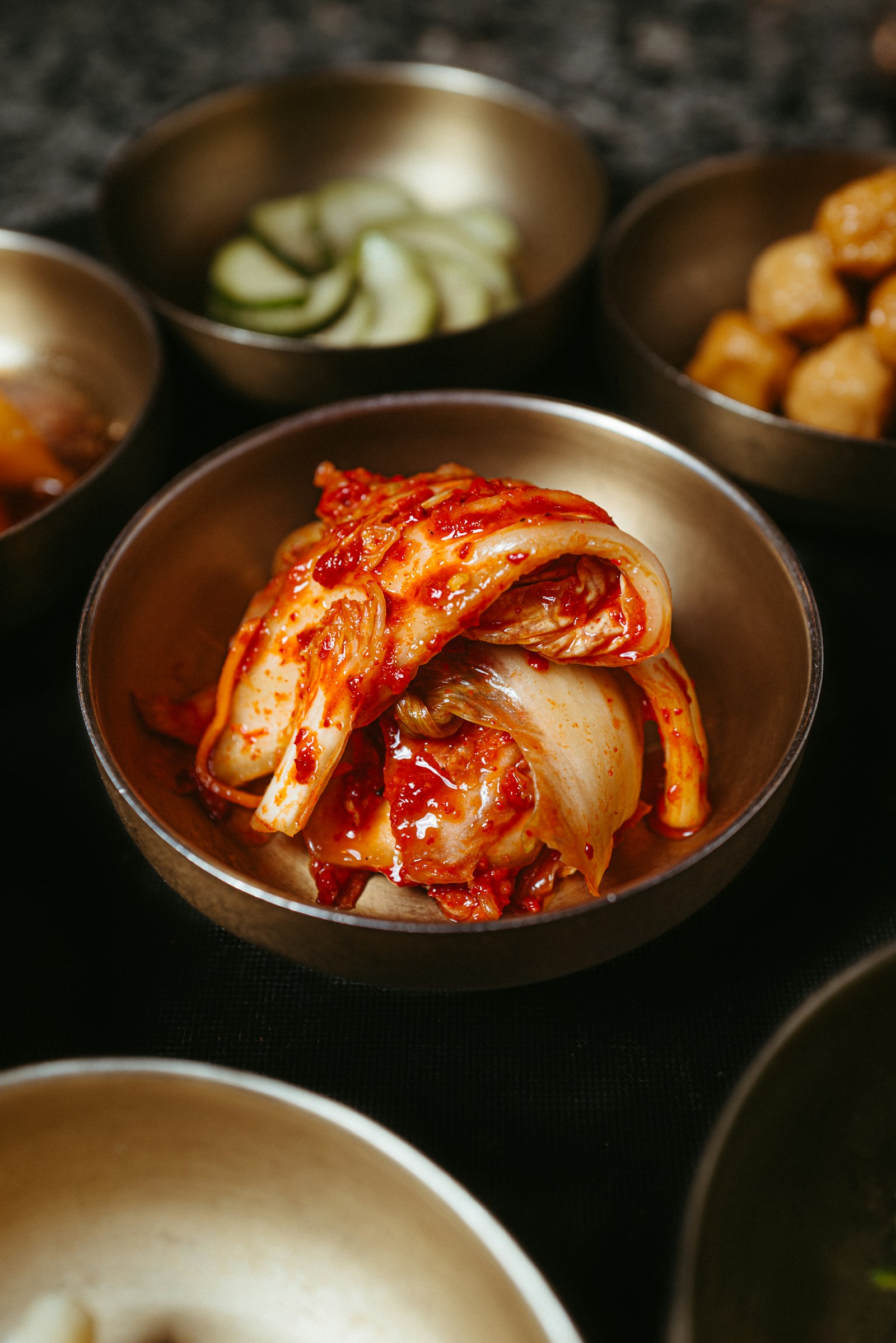
Why Koreans Have the Best Skin in the World
You’ve seen it on TikTok — the “glass skin” aesthetic. Luminous, clear, almost impossibly smooth. Korean skincare products get all the credit. But the real secret? It starts in the gut.
Scientists call it the gut-skin axis — a direct connection between your gut microbiome and your skin health. A healthy gut = less inflammation = clearer, more radiant skin. Kimchi feeds billions of good bacteria into your gut every single day.
The #1 Korean skincare product costs €3 and comes in a jar. It’s kimchi.
7 Things Kimchi Does to Your Body
Backed by science. Proven by 3,000 years of Korean longevity.
Probiotic Powerhouse
Billions of live lactic acid bacteria per serving — the same strains sold in expensive supplements, but packaged with fiber and vitamins that help them survive your gut.
Supports Weight Loss
Only 15 calories per 100g. Clinical studies show kimchi increases Akkermansia bacteria linked to lower obesity rates and improved metabolism. A 16-week trial confirmed reduced BMI and waist size.
Clearer Skin
The gut-skin axis is real. Kimchi’s probiotics reduce gut inflammation that triggers acne and dullness. Koreans don’t just apply skincare — they eat it.
Stronger Immune System
A 2025 study using single-cell genetic analysis found kimchi strengthens immune defences while preventing harmful overreactions. 70-80% of your immune system lives in your gut.
Heart Health
The garlic in kimchi contains allicin — one of nature’s most studied compounds for lowering cholesterol and blood pressure. Fiber binds cholesterol before it enters the bloodstream.
Anti-Aging
Chronic inflammation ages you faster than anything. Kimchi’s capsaicin, allicin, gingerol and antioxidants from cabbage fight inflammation at the cellular level. Korean women live to 86.6 on average.
Better Gut Health
Studies show kimchi reduces markers of IBS, ulcerative colitis and leaky gut. The cabbage fiber acts as a prebiotic — it feeds the good bacteria the kimchi delivers. A complete gut reset in a jar.
Why I Only Buy Jongga (종가)
Not all kimchi is created equal. I learned this the hard way — some supermarket kimchi is so badly made it tastes like disappointment in a jar. Watery, under-fermented, or loaded with vinegar shortcuts instead of real fermentation.
Jongga (종가) is Korea’s #1 kimchi brand. It has been since 1987, when it launched in collaboration with KAIST — the same university I studied at in Seoul. The name literally means “the family that carries the tradition” in Korean.
Jongga accounts for 52% of all kimchi exported from South Korea. It’s available in 60+ countries. In 2025, they partnered with a Michelin 3-star chef for a gourmet kimchi line. This is not a random brand — it is the gold standard.
When Koreans living abroad miss home, this is the kimchi they order. When Korean mothers make kimchi for their children, this is the standard they’re trying to match.
Jongga by the numbers
Continuously since 1987
The world’s most exported kimchi
One brand. Dominant.
Chef San Ho Won, 2025
Science-backed recipe since day one
Is Jongga Kimchi Healthy? Here’s What the Science Says
Yes — Jongga kimchi is genuinely healthy, and not just in a vague “fermented food is good” way. It’s one of the few supermarket kimchi brands that is traditionally fermented, meaning it still contains live probiotic cultures when it reaches you. Most cheap kimchi is heat-pasteurised to extend shelf life, which kills all the beneficial bacteria. Jongga skips that shortcut.
The napa cabbage base is rich in vitamins A, C and K. The garlic adds allicin (antibacterial). The ginger adds gingerols (anti-inflammatory). The chili adds capsaicin (metabolism-boosting). And the fermentation itself produces Lactobacillus kimchii — a probiotic strain found almost exclusively in kimchi.
Jongga Kimchi Probiotics: What’s Actually Inside
Studies published in the Journal of Medicinal Food identified the following strains in traditionally fermented kimchi:
- Lactobacillus kimchii — the dominant strain; unique to kimchi fermentation
- Leuconostoc mesenteroides — active early in fermentation; supports gut lining
- Lactobacillus plantarum — survives stomach acid; well-studied for immune support
- Weissella confusa — produces antimicrobial compounds that crowd out bad bacteria
Note: CFU counts decrease over time. Eat Jongga kimchi within 2–3 weeks of opening for maximum probiotic benefit.
⚠️ Warning: Most Kimchi Sold in Western Supermarkets Is Terrible
That kimchi sitting in your local supermarket? Likely pasteurised — which kills every single probiotic. It’s been heat-treated to extend shelf life, so what you’re eating is essentially spiced pickled cabbage with none of the health benefits. Some brands also use vinegar shortcuts instead of real fermentation, producing a harsh, one-dimensional flavour nothing like what Koreans actually eat. Buy unpasteurised, authentic Korean kimchi — or don’t bother.
🥗 Types of Kimchi — Beyond Napa Cabbage
Most people only know baechu kimchi (napa cabbage). Koreans eat over 200 varieties — here are the ones worth knowing.
How Koreans Actually Eat Kimchi
With rice
The most common way. Every Korean meal, every day.
Kimchi fried rice
Fry leftover rice with aged kimchi. Egg on top. The ultimate comfort food.
Straight from the jar
No shame. Every Korean does it at midnight.
In a sandwich
Korean fusion. Try it in a grilled cheese. You’ll thank us.
With Korean BBQ
The acid cuts through fatty meat perfectly. No KBBQ without kimchi.
Why Every Korean Eats Kimchi Every Day
Kimchi & Jongga — Frequently Asked Questions
Is Jongga kimchi pasteurized?
No. Jongga is sold refrigerated, not shelf-stable, specifically because it is unpasteurized — the live Lactobacillus cultures are still active when you eat it. Pasteurization involves heat-treating food to kill bacteria for shelf stability, which is exactly what destroys the probiotics in cheaper supermarket kimchi. If a kimchi is sold unrefrigerated on a regular shelf, it has almost certainly been pasteurized and has no live cultures left.
How much probiotics does Jongga kimchi have, and what strains?
Jongga doesn’t publish an exact CFU count on the label — no kimchi brand does, because the live bacteria count changes continuously as the product ferments. A fresh, properly refrigerated jar contains roughly 1–10 billion CFU of live Lactobacillus bacteria per 100g serving, and the count depends on the batch date and how long it’s been refrigerated — eat it fresh and store it cold for maximum benefit. The dominant strains identified in traditionally fermented kimchi are Lactobacillus plantarum, Lactobacillus brevis, Leuconostoc mesenteroides and Lactobacillus kimchii — the same family of probiotics found in yogurt and kefir, delivered here in a whole-food matrix.
Is Jongga kimchi healthy / good for you?
Yes — by most nutritional standards. It’s low calorie (around 15 calories per 100g), high in vitamins A, C and K, and naturally fermented with cabbage, garlic, ginger, gochugaru and fermented fish sauce, all of which contribute to its probiotic and prebiotic content. Studies on Korean fermented foods consistently point to benefits for gut microbiome diversity, immune function and inflammation markers. The main caveat is sodium — kimchi is salty by nature, so people monitoring sodium intake should be mindful of portion size.
Does kimchi actually help you lose weight?
Yes — and not just because it’s 15 calories per 100g. Clinical studies show kimchi increases Akkermansia bacteria in your gut, directly linked to lower obesity rates and improved metabolism. It also contains capsaicin which mildly boosts thermogenesis. Not a miracle cure, but one of the most evidence-backed foods for weight management.
Is kimchi good for your skin?
The gut-skin axis is real and increasingly well-documented: a healthier gut microbiome reduces systemic inflammation, which shows up in skin as less redness, fewer breakouts, and improved barrier function. Korean dermatologists frequently mention fermented food consumption as a dietary factor in Korean glass skin, alongside sunscreen and consistent skincare. Kimchi alone won’t fix skin, but it’s a legitimate part of the dietary pattern that supports it.
Why do Koreans live so long?
South Korean women have an average life expectancy of 86.6 years — top 5 globally. Researchers point to three things: low processed food consumption, high vegetable intake, and fermented foods at every meal. Kimchi sits at the centre of all three. It’s not the only factor, but it’s impossible to separate Korean longevity from Korean kimchi consumption.
How much kimchi should I eat per day?
Start with 50g (a small side portion). Koreans eat up to 200g daily. Your gut needs time to adjust to the influx of new bacteria — start small, build up over 2 weeks. If you’re not used to fermented foods, jumping straight to 200g a day will be… an experience.
What’s the difference between cheap kimchi and good kimchi?
Real kimchi is fermented naturally over time. Bad kimchi is rushed with vinegar shortcuts, over-salted, poorly seasoned, and often pasteurised — which kills all the probiotics. The difference in taste is enormous. Jongga uses a traditional recipe refined with KAIST food science research. You’ll taste the difference in the first bite.
Can I eat kimchi every day?
Yes. 50 million Koreans do. The only caveat: kimchi is high in sodium, so if you have high blood pressure, moderate your intake. Otherwise, daily kimchi is one of the single best dietary habits you can build.
Stop Reading. Start Eating.
The same kimchi Koreans eat at home. Korea’s #1 brand. Delivered to your door.
Your gut has been waiting 3,000 years for this.
🌶️ Get Jongga Kimchi on Amazon →
Affiliate link — commission at no extra cost to you. I only recommend what I personally eat. Prices last checked August 2026.
Also try it in a bowl of Shin Ramen 🍜 or alongside our K-Beauty skincare routine ✨
Also Worth Reading
🫙
Making Kimchi at Home?
The onggi-style container that actually gets fermentation right
🌶️
Best Gochujang, Reviewed Honestly
Korea’s real best-selling hot pepper paste — ingredients included
🍢
Gwangjang Market Food Tour
Korea’s oldest food market, with a guide who knows the vendors
🍌
Korean Banana Milk Is Suddenly Viral
The 1974 drink everyone’s putting in their coffee now
🇨🇳
China Trip Checklist 2026
Going to China? Full guide — apps, payments, gear
📱
Best eSIM for Asia
Unlimited data — works in China without VPN
💡
Korean LED Face Mask Review
Red light therapy at home — does it work?
Kimchi kimbap is a staple in Korean lunchboxes — the fermented tang of kimchi works perfectly as a filling inside a rice roll. If you want to try making it, our kimbap guide shows you exactly how → And since almost every kimchi side dish gets eaten with rice, here’s the rice cooker I actually use for perfect rice in 12 minutes.
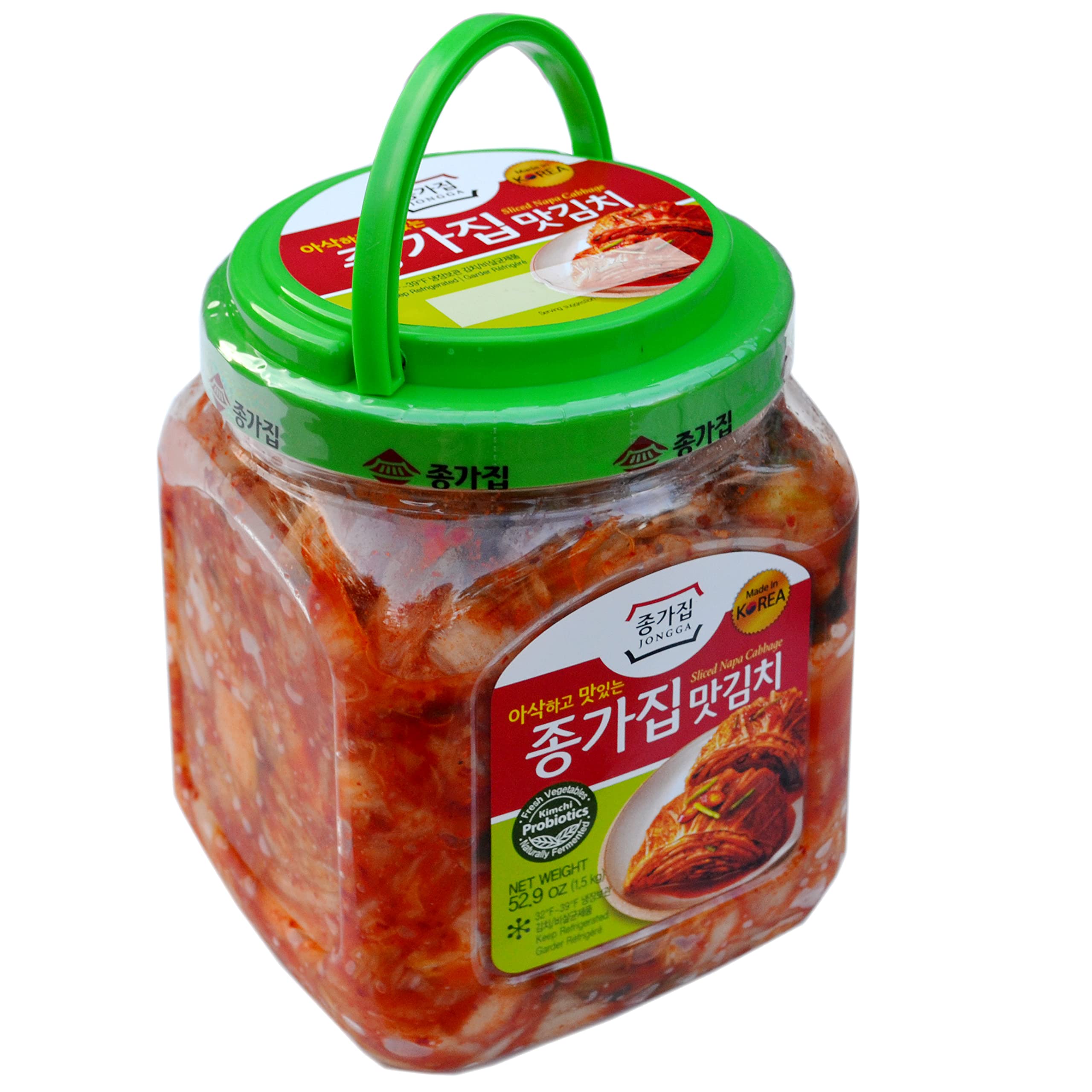
The Korea & Asia Travel Checklist
Everything I actually pack — gear, docs, food, DMZ essentials. Built from a year living in Seoul.
🇰🇷 THE KOREA TRIP PLANNER
Dreaming of trying these in Korea?
Turn the craving into a trip. The Korea Trip Planner (PDF) maps it all out — a ready 7-day Seoul itinerary, packing & pre-flight checklists, and where to eat — one printable file you keep forever.
Take our free 1-page Korea Pre-Flight Checklist — visas, apps, money, packing — from the team behind everything on this site.