


The Best Korean Stone Bowl (Dolsot) in 2026, Plus How to Season It & the Crispy-Rice Bibimbap Recipe
Three honest picks at real prices, how to season a brand-new bowl so it never cracks, the trick to that golden nurungji crust, and the full dolsot bibimbap recipe, everything the “best bowl” lists leave out.
The short answer
After weighing authenticity, heat retention, reviews and price, these are the three worth your money. A real dolsot (“stone pot”) is what gives you the sizzling, crispy rice you can’t get in a normal bowl, and the right one lasts a lifetime.
Quick comparison
| Bowl | Material | Size | Lid / tray | Rating | Price | Best for |
|---|---|---|---|---|---|---|
| Crazy Korean Cooking | Premium ceramic (made in Korea) | ~32 oz | Lid | 4.7★ (564) | $40 | Authenticity & longevity |
| Sanbege 2-Pack | Natural granite + steel ring | 32 oz each | Wood base | 4.3★ (267) | $38 | Couples / two servings |
| ElinCube Premium | Ceramic stoneware | 37 oz | Lid + platter | 4.5★ (463) | $28 | Complete table-ready set |
Prices and ratings verified at time of writing; Amazon prices change, tap through for the live price.
The 3 picks, reviewed honestly

Crazy Korean Cooking Dolsot (with lid)
This is the one I keep recommending to friends. It’s a dense Korean-made ceramic stoneware pot, the kind you’ll find in actual Korean homes, and that density is the whole point: it holds heat long enough to keep sizzling at the table and crisp the rice evenly. The included lid matters more than people expect (it’s what lets you make sotbap, stone-pot rice, and soups too).
- Genuinely made in Korea, authentic density & finish
- Holds heat the longest of the three
- Comes with a proper lid
- Reviewers report years of daily use without cracking
- Priciest of the three
- Single bowl (buy two for couples)
- No wood trivet included, you’ll want one for the table
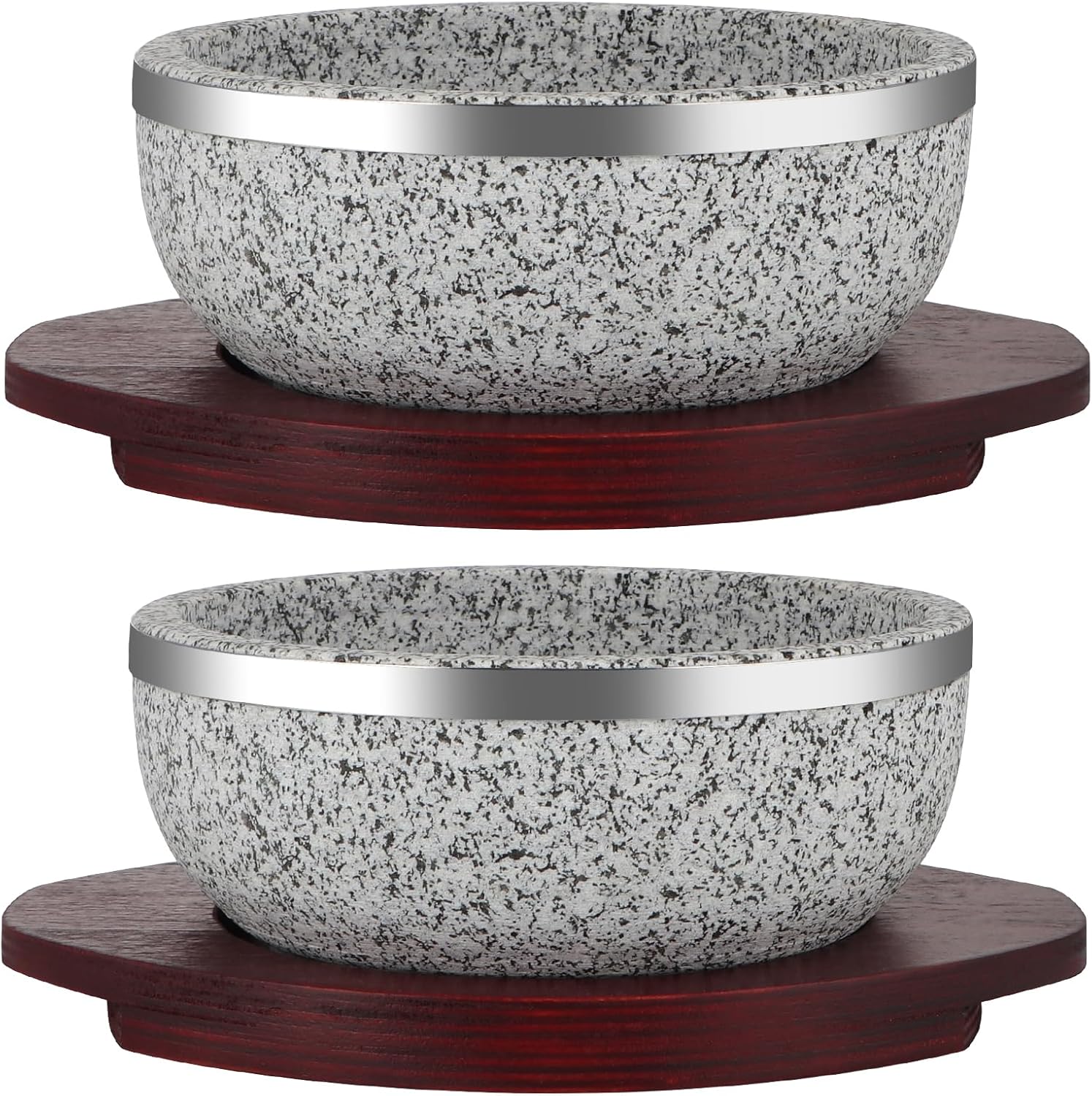
Sanbege Granite Stone Bowl (2-Pack, wood base)
Two natural-granite bowls for the price of one premium ceramic, the obvious choice if you’re cooking for a couple. Real stone (not a thin composite), a stainless ring for reinforcement, and wood bases so you can carry them straight to the table still sizzling. Granite takes a touch longer to heat than ceramic but holds it beautifully.
- Two bowls, unbeatable value for couples
- Solid, heavy natural granite
- Wood base doubles as a trivet
- Amazon’s Choice
- No lid
- Heavier & slower to heat than ceramic
- A few reports of bowls arriving chipped, inspect on arrival

ElinCube Premium Set (bowl + lid + platter)
The best-equipped option for the money: a 37 oz stoneware bowl plus a lid and a wooden platter that catches heat and protects your table. It’s the easiest to serve from and the most gift-friendly, everything you need in one box for under $30.
- Lid + platter included, fully table-ready
- Largest capacity (37 oz)
- Best price of the set-and-lid options
- Great as a gift
- Stoneware, not natural stone, slightly less heat retention than granite
- Season it well before first use (see below)
How to season a new stone bowl (do this first)
This is the step most guides skip, and skipping it is the #1 reason bowls crack or taste of dust. A new dolsot needs seasoning to seal the stone, remove manufacturing residue, and build a stick-resistant surface. It takes 40 minutes, once.
- Inspect & rinse. Check for any crack or chip, never heat a cracked bowl, it can shatter. Rinse under running water (no soap).
- Salt-water boil. Sit the bowl in a larger pot, cover it with water, add ~2 tbsp salt. Bring to a boil, then simmer 20–30 minutes. This strengthens the stone and draws out residue.
- Dry completely. Let it cool in the water, then air-dry fully, trapped moisture is what cracks stone under heat.
- Oil coat. Rub a thin layer of sesame or neutral oil over the whole inside with a paper towel.
- Bake the oil in. 300°F (150°C) oven for 30–60 min, or low heat on the stovetop for 20 min. Cool, wipe out excess. Done, it’s ready for life.
The secret to crispy rice (nurungji)
The whole reason to own a dolsot is the nurungji, the golden, crackly rice crust at the bottom. Here’s how to get it every time:
- Heat the empty seasoned bowl on medium for 2–3 minutes until hot.
- Coat with ~1 tbsp sesame oil, swirling up the sides, this is what crisps and flavours the crust.
- Press hot cooked rice firmly to the bottom in an even layer.
- Leave it on medium 3–4 minutes and do NOT stir. When you hear a gentle crackle and smell toasted rice, the crust has formed.
- Serve sizzling. Scrape the golden crust up as you eat, or pour in a little hot tea or water at the end for sungnyung.
Full Dolsot Bibimbap Recipe
Ingredients
- 3 cups cooked short-grain rice (day-old is best)
- 2 tbsp sesame oil (for the bowls)
- 150g beef (bulgogi or minced), seasoned with soy, sugar, garlic
- 1 handful spinach, blanched & seasoned
- 1 cup bean sprouts, blanched
- 1 carrot, julienned & sauteed
- 1 small zucchini, sliced & sauteed
- 4 shiitake mushrooms, sliced & sauteed
- 2 eggs
- Toasted sesame seeds + roasted gim (seaweed)
- Sauce: 2 tbsp gochujang, 1 tbsp sesame oil, 1 tbsp water, 2 tsp sugar, 1 tsp vinegar
Method
- Prep the toppings. Blanch and lightly season the spinach and bean sprouts; saute the carrot, zucchini and mushrooms separately with a pinch of salt. Cook the seasoned beef. Mix the gochujang sauce.
- Heat the dolsot. Warm the seasoned stone bowl on medium, then coat with 1 tbsp sesame oil.
- Add the rice. Press hot rice firmly into the bottom and sides. Leave on medium 3–4 min, do not stir, to form the crust.
- Arrange toppings in neat sections over the rice; nestle the beef in the middle.
- Add the egg. Crack a raw yolk into the centre (it cooks in the heat) or top with a fried egg.
- Finish & serve sizzling. Scatter sesame seeds and gim. Bring to the table still crackling, add gochujang sauce to taste, and mix everything, scraping up the crispy rice as you go.
How to choose: what actually matters
Material, stone vs granite vs ceramic
Natural stone/granite holds heat longest and feels the most authentic, but is heaviest and slowest to heat (Sanbege). Korean-made ceramic stoneware is the sweet spot, dense, fast, durable (Crazy Korean Cooking). Avoid thin, lightweight “stone-look” composites that crack within months, weight is the quickest authenticity tell.
Size
A single serving is ~30–34 oz, one person, one bowl. For sharing soups/stews, go 44–68 oz. Bibimbap is traditionally one-bowl-per-person, so for a couple a 2-pack beats one big bowl.
Lid & tray
A lid unlocks stone-pot rice and soups (worth having). A wood base/tray isn’t optional, the bowl comes off the stove at 200°C+ and will scorch your table without one.
Cooktop compatibility
Stone bowls work on gas, electric coil and in the oven. They do not work on induction (stone isn’t magnetic) and never go in the microwave. If you have induction, use a gas burner or an induction-to-gas adapter plate.
Common problems (and how to avoid them)
FAQ
What is a dolsot?
Do I really need to season a new stone bowl?
Can I use a dolsot on an induction cooktop?
How do I clean it without ruining it?
Why did my stone bowl crack?
Granite or ceramic, which is better?
What size should I buy?
Keep reading
Best hot pot at home →
Best Korean BBQ grill →
Korean food guides →
All my Korea essentials →
As an Amazon Associate, KimchiBoy earns from qualifying purchases, at no extra cost to you. Picks are chosen on authenticity, reviews and real-world use, not commission. Prices and ratings were accurate at the time of writing.
Affiliate disclosure: some links on this page are affiliate links. If you buy through them I may earn a small commission at no extra cost to you — it never changes which products I recommend.